
 iscover
Warning: Undefined array key "image-size-770" in /data/www/upgrade/australianaviation.com.au/httpdocs/wp-content/themes/australianaviation/functions.php on line 1310
Warning: Trying to access array offset on null in /data/www/upgrade/australianaviation.com.au/httpdocs/wp-content/themes/australianaviation/functions.php on line 1310
Warning: Undefined array key "image-size-770" in /data/www/upgrade/australianaviation.com.au/httpdocs/wp-content/themes/australianaviation/functions.php on line 1310
Warning: Trying to access array offset on null in /data/www/upgrade/australianaviation.com.au/httpdocs/wp-content/themes/australianaviation/functions.php on line 1310
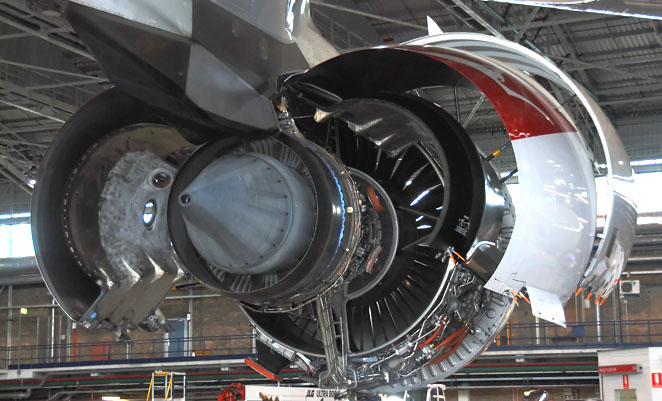
The Australian Transport Safety Bureau (ATSB) has identified fatigue cracking “understood to be related to the manufacturing process” as “central” to the QF32 Rolls-Royce Trent 900 uncontained failure last month.
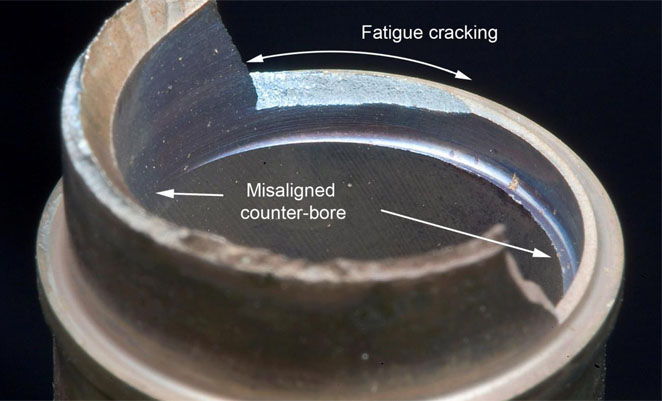
“Recent examination of components removed from the failed engine at the Rolls-Royce plc facility in Derby, United Kingdom, have identified the presence of fatigue cracking within a stub pipe that feeds oil into the high pressure (HP)/intermediate pressure (IP) bearing structure,” the ATSB safety recommendation reads. “While the analysis of the engine failure is ongoing, it has been identified that the leakage of oil into the HP/IP bearing structure buffer space (and a subsequent oil fire within that area) was central to the engine failure and IP turbine disc liberation event.”
This content is available exclusively to Australian Aviation members.
A monthly membership is only $5.99 or save with our annual plans.
- Australian Aviation quarterly print & digital magazines
- Access to In Focus reports every month on our website
- Unlimited access to all Australian Aviation digital content
- Access to the Australian Aviation app
- Australian Aviation quarterly print & digital magazines
- Access to In Focus reports every month on our website
- Access to our Behind the Lens photo galleries and other exclusive content
- Daily news updates via our email bulletin
- Unlimited access to all Australian Aviation digital content
- Access to the Australian Aviation app
- Australian Aviation quarterly print & digital magazines
- Access to In Focus reports every month on our website
- Access to our Behind the Lens photo galleries and other exclusive content
- Daily news updates via our email bulletin
The ATSB says that further examination found “axial misalignment” of an area of counter-boring within the inner diameter of the pipe, which resulted in localised thinning of the pipe, which in turn led to fatigue cracking.
“Misaligned stub pipe counter-boring is understood to be related to the manufacturing process. This condition could lead to an elevated risk of fatigue crack initiation and growth, oil leakage and potential catastrophic engine failure from a resulting oil fire,” the ATSB notes.
Subsequent to the ATSB’s findings, Rolls-Royce has issued a service bulletin to Trent 900 operators, and CASA a direction to Qantas for inspections of the engines, with Qantas announcing it will conduct “further, more detailed one-off inspections” of its Trent 900s.
“After discussions with the ATSB and Rolls-Royce, it was decided it was prudent to conduct further inspections of engine components, although there is no immediate risk to flight safety,” Qantas says.
Qantas currently has two A380s back in service, and says borescope inspections of these aircraft’s engines will begin Thursday afternoon. It says it does not expect the new inspections will affect A380 flight operations, but is putting contingency plans in place “if needed”.
“The ATSB’s recommendation is that these one-off inspections be conducted within two flight cycles, which provides a level of inspection over and above the current 20 cycle inspection required by the European Aviation Safety Agency (EASA),” the Qantas statement reads.

“Qantas will determine any further response after it has finalised the inspection regime and consulted with both regulators and the manufacturer.”
The ATSB will issue its preliminary factual report into QF32 on Friday.