
 iscover
Warning: Undefined array key "image-size-770" in /data/www/upgrade/australianaviation.com.au/httpdocs/wp-content/themes/australianaviation/functions.php on line 1310
Warning: Trying to access array offset on null in /data/www/upgrade/australianaviation.com.au/httpdocs/wp-content/themes/australianaviation/functions.php on line 1310
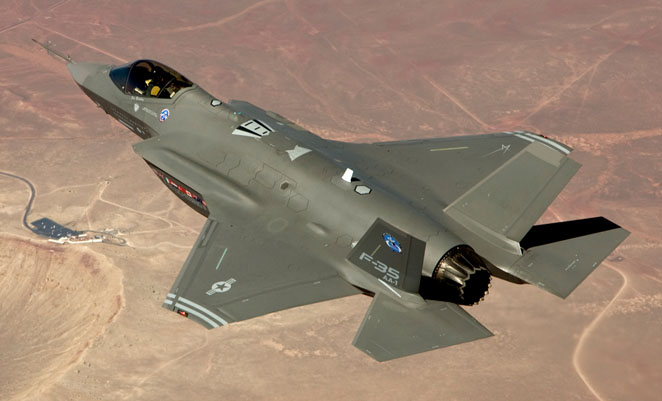
Northrop Grumman has demonstrated how the F-35 Lightning II Joint Strike Fighter’s sensors are able to detect and track multiple rocket launches using its AN/AAQ-37 distributed aperture system (DAS) and AN/APG-81 active electronically scanned array (AESA) radar.
The demonstration was carried out with the DAS and APG-81 fitted to a BAC 1-11 flying testbed, and saw the sensors detect and track launches from NASA’s Science Mission Directorate-sponsored Anomalous Transport Rocket Experiment launch operation.
This content is available exclusively to Australian Aviation members.
A monthly membership is only $5.99 or save with our annual plans.
- Australian Aviation quarterly print & digital magazines
- Access to In Focus reports every month on our website
- Unlimited access to all Australian Aviation digital content
- Access to the Australian Aviation app
- Australian Aviation quarterly print & digital magazines
- Access to In Focus reports every month on our website
- Access to our Behind the Lens photo galleries and other exclusive content
- Daily news updates via our email bulletin
- Unlimited access to all Australian Aviation digital content
- Access to the Australian Aviation app
- Australian Aviation quarterly print & digital magazines
- Access to In Focus reports every month on our website
- Access to our Behind the Lens photo galleries and other exclusive content
- Daily news updates via our email bulletin
The DAS and APG-81 autonomously detected, tracked and targeted multiple, simultaneous ballistic rockets. The DAS autonomously detected all five rockets, launched in rapid succession, and tracked them from initial launch well past the second stage burnout.
“Northrop Grumman demonstrated these ballistic missile tracking modes with only minor modifications to the baseline F-35 JSF radar and DAS software,” said Jeff Leavitt, vice president of Northrop Grumman’s combat avionic systems business unit.
“Since DAS is always staring simultaneously in every direction, an operator does not have to point the sensor in the direction of a target to gain a track. The F-35 pilot could continue the primary mission while the sensors automatically observe ballistic missile threats.”