
 iscover
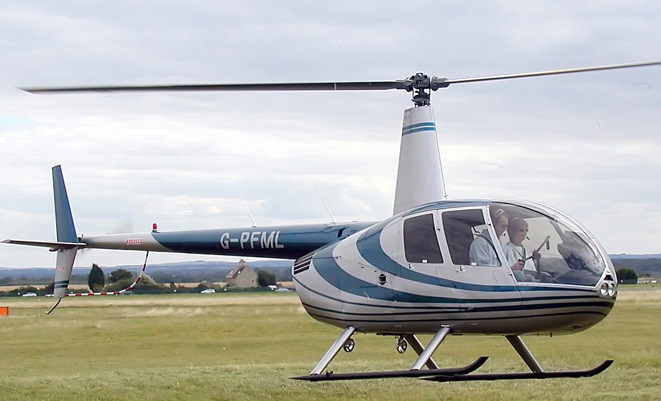
A final report by the Australian Transport and Safety Bureau (ATSB) into the crash of a Robinson R44 in February 2012 that killed its two occupants has reinforced calls to replace the helicopter’s fuel tanks, which have been shown to have a tendency to rupture and contribute to fatal accidents.
The ATSB found in its investigation of the crash of VH-COK as it lifted off with a pilot and cameraman from Jaspers Brush Aerodrome in NSW for an aerial photography mission, that “the pilot’s door opened and the pilot reached out instinctively to close the door. Simultaneously the helicopter abruptly pitched nose-up then steeply nose-down, rolling to the right before the right landing gear skid and main rotor blades struck the ground. A fuel-fed fire started in the vicinity of the fuel tanks and lower mast area prior to the helicopter coming to a stop. Both occupants were fatally injured and the helicopter was destroyed.”
This content is available exclusively to Australian Aviation members.
A monthly membership is only $5.99 or save with our annual plans.
- Australian Aviation quarterly print & digital magazines
- Access to In Focus reports every month on our website
- Unlimited access to all Australian Aviation digital content
- Access to the Australian Aviation app
- Australian Aviation quarterly print & digital magazines
- Access to In Focus reports every month on our website
- Access to our Behind the Lens photo galleries and other exclusive content
- Daily news updates via our email bulletin
- Unlimited access to all Australian Aviation digital content
- Access to the Australian Aviation app
- Australian Aviation quarterly print & digital magazines
- Access to In Focus reports every month on our website
- Access to our Behind the Lens photo galleries and other exclusive content
- Daily news updates via our email bulletin
Investigations showed that “the pilot’s door was not properly latched prior to lift off and opened during the turn to depart. In attempting to shut the door the pilot probably let go of the cyclic control from the normal (right) control hand, allowing for an unintended, abrupt nose-up pitch and the helicopter tail hitting the ground. The helicopter nosed over and impacted the ground.”
Crucially, as has been the case in a number of R44 accidents, the ATSB found a “fire began when one of the fuel tanks was breached. The fatal injuries were due to the post-impact fire. A number of these R44s, including VH‑COK, had not and were not yet required to have been modified in accordance with a manufacturer service bulletin that specified replacement of aluminium fuel tanks with more impact‑resistant bladder‑type fuel tanks.
“The installation of these tanks decreased the risk of a post-accident fire. At the time of the accident, these tanks were required to be fitted by 31 December 2014,” the ATSB reported.
In response to this and a number of other fatal accidents in other R44 helicopters, the Civil Aviation Safety Authority (CASA) and the ATSB have separately highlighted the benefits of the upgraded bladder-type fuel tank and related modifications. In addition, Robinson progressively reduced the compliance time on service bulletin SB-78 in respect of the installation of the bladder‑type fuel tanks to April 30 2013.
Consequently, the Civil Aviation Safety Authority (CASA) has now issued an airworthiness grounding all R44s not fitted with flexible fuel tanks.
Said CASA in a statement this week: “CASA has written several times to R44 operators highlighting the importance of replacing the fuel tanks and emphasising the need to complete the upgrade by the deadline set by Robinson of 30 April 2013.

“R44 operators were also directed by CASA to provide notification of the status of their helicopter, including its maintenance program.
“More than 170 R44 operators have still not provided this notification to CASA, prompting the need to issue an airworthiness directive.”







Mike Borgelt
says:Sounds to me like the ATSB might have been better off emphasizing doing the vital actions properly before adding power for takeoff.
It is an aircraft. Crash it and there’s a good chance you will die. Best not to crash.