
 iscover
Warning: Undefined array key "image-size-770" in /data/www/upgrade/australianaviation.com.au/httpdocs/wp-content/themes/australianaviation/functions.php on line 1310
Warning: Trying to access array offset on null in /data/www/upgrade/australianaviation.com.au/httpdocs/wp-content/themes/australianaviation/functions.php on line 1310
Warning: Undefined array key "image-size-770" in /data/www/upgrade/australianaviation.com.au/httpdocs/wp-content/themes/australianaviation/functions.php on line 1310
Warning: Trying to access array offset on null in /data/www/upgrade/australianaviation.com.au/httpdocs/wp-content/themes/australianaviation/functions.php on line 1310
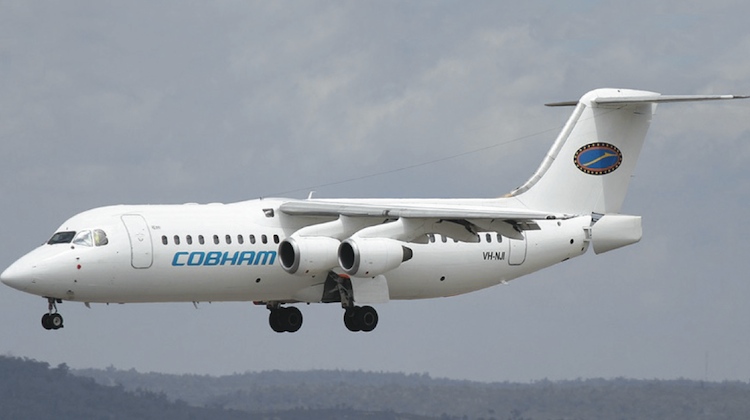
Cobham Aviation Services says it brought in extra checks in response to a 2014 engine fire on one of its Avro RJ100s.
The Australian Transport Safety Bureau (ATSB) has handed down its report on the incident, which took place on April 29 2014 when the No.2 engine on VH-NJI sustained a mechanical failure shortly after takeoff from Perth to Barrow Island and resulted in an inflight fuel-fed fire.
This content is available exclusively to Australian Aviation members.
A monthly membership is only $5.99 or save with our annual plans.
- Australian Aviation quarterly print & digital magazines
- Access to In Focus reports every month on our website
- Unlimited access to all Australian Aviation digital content
- Access to the Australian Aviation app
- Australian Aviation quarterly print & digital magazines
- Access to In Focus reports every month on our website
- Access to our Behind the Lens photo galleries and other exclusive content
- Daily news updates via our email bulletin
- Unlimited access to all Australian Aviation digital content
- Access to the Australian Aviation app
- Australian Aviation quarterly print & digital magazines
- Access to In Focus reports every month on our website
- Access to our Behind the Lens photo galleries and other exclusive content
- Daily news updates via our email bulletin
The aircraft landed safely back in Perth after the pilots extinguished the fire by shutting down the No.2 engine and activating the fire suppression system. There were no injuries.
The report said fire was caused by cracks in the Honeywell LF507-1F engine that was a result of “unapproved” repairs.
“The repair to the combustor housing of the No. 2 engine in NJI was an unapproved repair,” the ATSB report said.
“The non-approved repair was not identified in any of the subsequent heavy maintenance inspections.
“The ATSB found that the normal scheduled visual inspection of the housing, which was designed to find cracks before they developed into a fracture, was ineffective in this case.”
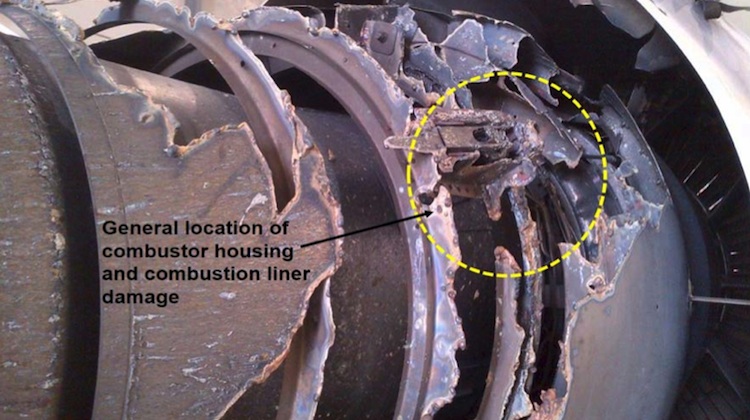
In response to the incident, Cobham inspected all of its LF507 engines, and conducted maintenance on a number of engines where cracking was found in accordance with the Honeywell maintenance manual, the ATSB said.

Further, Honeywell also changed parts of its maintenance and overhaul manuals for this particular engine, and issued a service bulletin alerting other operators of the aircraft to the issue.
“This occurrence highlights the importance of repairing aircraft components in accordance with the manufacturer’s specifications and ensuring that the repair meets the design intent of the manufacturer, the ATSB report said.
Cobham president Peter Nottage said in a separate statement: “In response to this incident, Cobham and the engine manufacturer have introduced a range of additional checks and inspections as part of our ongoing commitment to achieving the highest possible safety standards for our passengers and crew.”
“This report details how we proactively instigated two additional levels of inspections on all engines in our fleet and worked closely with the engine manufacturer as they reviewed their maintenance program and guidance to independent repair organisations.
“The repair organisation that conducted the repair is not used by Cobham and audits of our approved repairer have confirmed that the processes in use are in accordance with Honeywell approved manuals and processes.”
The ATSB report noted VH-NJI was introduced into Australian service in 2012 and the No.2 engine position was fitted with engine serial number LF07405, combustor turbine module (CTM) serial number 93K004 and combustor housing serial number 363. Previously, the aircraft had flown with an Indonesian and Turkish operator.
The last heavy maintenance inspection activity of the CTM was in 2009, the ATSB said, with the work undertaken by a European workshop that is no longer in business.
While an examination found that the engine had been weld-repaired on three separate occasions, the only recorded weld repair to the CTM housing was in 2005.
“Although, as the CTM housing was an exchanged unit, its history could not be established,” the ATSB said.
“Therefore, either the CTM housing was repaired at or prior to 2005, or the housing was repaired after 2005 and the repair was not recorded.
“From the evidence available, the ATSB could not determine which was the case.”
The last heavy maintenance inspection and disassembly of the CTM was in 2009, about 3,438 engine cycles prior to the occurrence.







Ben
says:These planes must be getting close to being taken out of service, does anyone know how long they can keep flying?