iscover
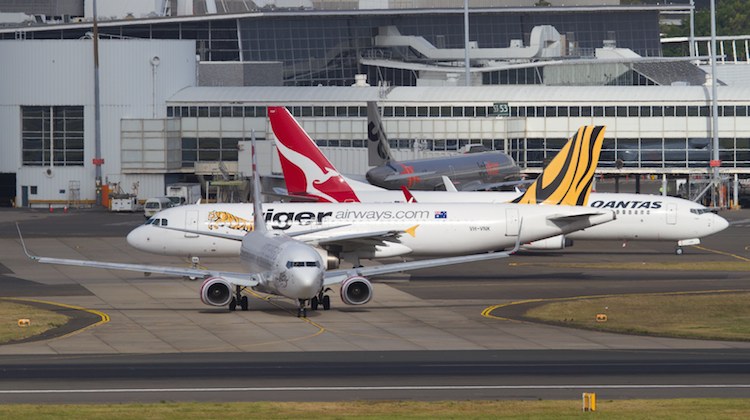
Australia’s domestic carriers accelerated capacity reductions in response to market conditions during May, resulting in fuller aircraft, new figures show.
The monthly traffic report from the International Air Transport Association (IATA) showed Australian domestic available seat kilometres (ASK) fell 2.9 per cent in May, compared with the prior corresponding period, while demand measured by revenue passenger kilometres (RPK) rose just 0.4 per cent.
This content is available exclusively to Australian Aviation members.
A monthly membership is only $5.99 or save with our annual plans.
- Australian Aviation quarterly print & digital magazines
- Access to In Focus reports every month on our website
- Unlimited access to all Australian Aviation digital content
- Access to the Australian Aviation app
- Australian Aviation quarterly print & digital magazines
- Access to In Focus reports every month on our website
- Access to our Behind the Lens photo galleries and other exclusive content
- Daily news updates via our email bulletin
- Unlimited access to all Australian Aviation digital content
- Access to the Australian Aviation app
- Australian Aviation quarterly print & digital magazines
- Access to In Focus reports every month on our website
- Access to our Behind the Lens photo galleries and other exclusive content
- Daily news updates via our email bulletin
In response, load factors on Australia’s domestic flights were up 2.5 percentage points to 75 per cent in May.
A combination of sluggish consumer confidence, as well as uncertainty surrounding the federal election, prompted both Australia’s two major airline groups Qantas and Virgin Australia to wind back capacity in recent times.
The May cut to ASKs was larger than the 1.1 per cent reduction in April.
“Capacity in Australia has also been cut over the past few months, reflecting a combination of fewer frequencies and smaller aircraft,” IATA said in its monthly report.
The global picture showed demand for air travel was slowing due to recent terrorist attacks and economic jitters arising from the recent United Kingdom vote to leave the European Union.
Overall, IATA’s monthly report showed revenue passenger kilometres (RPK) rose 4.6 per cent in May, compared with the prior corresponding period. It was the same pace of expansion recorded in April.

“After a very strong start to the year, demand growth is slipping back toward more historic levels,” IATA director general and chief executive Tony Tyler said in a statement.
“A combination of factors are likely behind this more moderated pace of demand growth. These include continuing terrorist activity and the fragile state of the global economy. Neither bode well for travel demand.
“And the shocks of Istanbul and the economic fallout of the Brexit vote make it difficult to see an early uptick.”
IATA said capacity, measured by available seat kilometres (ASK), rose 5.5 per cent in May. With more seats added than market demand, load factors fell 0.7 percentage points to 78.7 per cent.
Airlines in the Asia Pacific experienced a third consecutive month of RPK growth, with demand up 5.1 per cent in May, while ASKs were up 6.4 per cent. As a result, load factors fell 1.3 percentage points to 77.1 per cent.
The strongest growth in RPKs came in the Middle East, where carriers in the region recorded an 11.8 per cent lift in demand. However, the aggressive capacity growth – ASKs rose 15.6 per cent in May – led to a 2.4 percentage point drop in load factors to 71.9 per cent.
“Growth in capacity has now exceeded traffic growth in 18 of the past 20 months,” IATA said of the Middle East.