
 iscover
Warning: Undefined array key "image-size-770" in /data/www/upgrade/australianaviation.com.au/httpdocs/wp-content/themes/australianaviation/functions.php on line 1310
Warning: Trying to access array offset on null in /data/www/upgrade/australianaviation.com.au/httpdocs/wp-content/themes/australianaviation/functions.php on line 1310
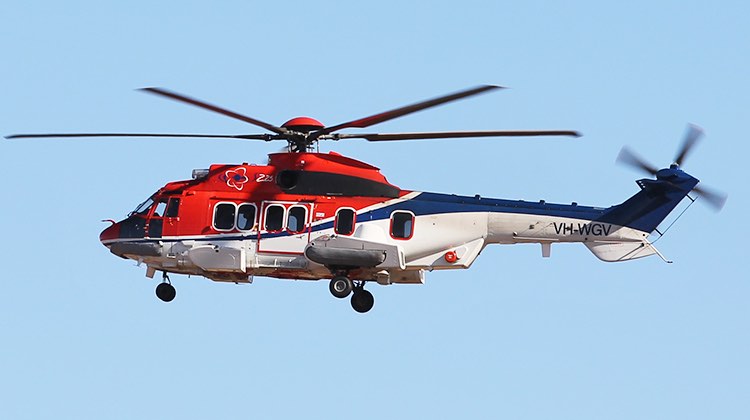
The Accident Investigation Board of Norway (AIBN) has determined the fatal crash of Airbus Helicopters H225 (EC225LP), LN-OJF, on April 29 near Turoy, Norway, was most likely caused by a fatigue fracture in one of the eight second stage planet gears inside the twin-engine helicopter’s main gearbox (MGB).
The AIBN’s most recent preliminary report which it released on June 28, its fourth since the investigation began, said the fracture propagated in a manner which was unlikely to become detected by existing mandatory or supplementary systems for warning of an imminent failure. The AIBN also said it considered it unlikely that the fatigue crack propagated as a consequence of a structural break-up of another component.
This content is available exclusively to Australian Aviation members.
A monthly membership is only $5.99 or save with our annual plans.
- Australian Aviation quarterly print & digital magazines
- Access to In Focus reports every month on our website
- Unlimited access to all Australian Aviation digital content
- Access to the Australian Aviation app
- Australian Aviation quarterly print & digital magazines
- Access to In Focus reports every month on our website
- Access to our Behind the Lens photo galleries and other exclusive content
- Daily news updates via our email bulletin
- Unlimited access to all Australian Aviation digital content
- Access to the Australian Aviation app
- Australian Aviation quarterly print & digital magazines
- Access to In Focus reports every month on our website
- Access to our Behind the Lens photo galleries and other exclusive content
- Daily news updates via our email bulletin
Further investigations by the AIBN since the release of its last preliminary report have determined the failure of a suspension bar attachment or failure of the MGB conical housing were not the initiating event that caused the rotor head to separate from the fuselage in-flight.
The AIBN reported it was aware LN-OJF’s MGB was involved in a road accident during transport in 2015. The MGB was inspected, repaired and released for flight by the manufacturer before it was installed on LN-OJF in January 2016. Whether there is a link between this event and the initiation and growth of a fatigue fracture is currently being investigated.
The accident involving LN-OJF and its findings to date are similar in circumstances to the fatal 2009 crash of an Airbus Helicopters AS332 L2, G-REDL, off the coast of Peterhead, Scotland where a fatigue fracture in the second stage planet gear in the epicyclic module caused the main rotor and part of the epicyclic module to separate from the fuselage. In that accident all 16 crew and passengers on board were killed when the fuselage impacted the water at high speed.
“We continue to focus our efforts on providing assistance to the investigation team and the authorities as they work toward the identification of the accident root cause,” said Airbus Helicopters in a statement.
“In parallel, we are putting precautionary measures in place to support our global customers and address potential initiating events.”
While the investigation is ongoing, and with some important components still missing, the AIBN said it will now seek to determine what initiated the fracture in the second stage planet gear and the mechanisms behind its growth.