
 iscover
Warning: Undefined array key "image-size-770" in /data/www/upgrade/australianaviation.com.au/httpdocs/wp-content/themes/australianaviation/functions.php on line 1310
Warning: Trying to access array offset on null in /data/www/upgrade/australianaviation.com.au/httpdocs/wp-content/themes/australianaviation/functions.php on line 1310
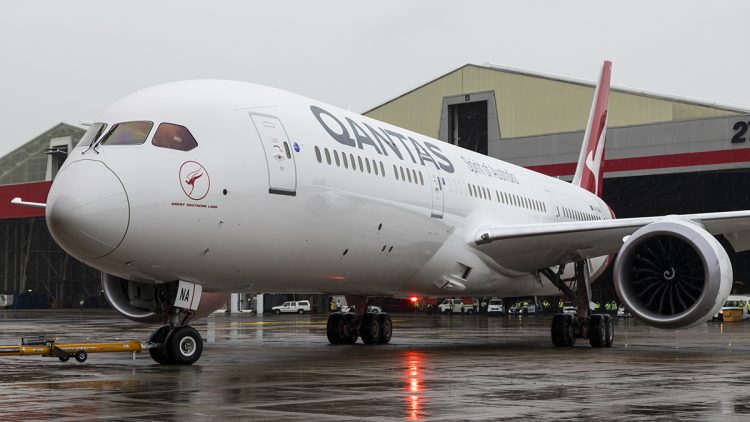
Qantas says its will power a Boeing 787-9 flight between Melbourne and Los Angeles with a type of biojet in early 2018 as part of efforts to support local production of seed crops necessary to produce sustainable aviation biofuels.
The airline said the biofuel for the flight would be made from a type of mustard seed called carinata, with Qantas partnering with Canada-based Agrisoma Biosciences help grow the seed at a commercial scale in Australia.
This content is available exclusively to Australian Aviation members.
A monthly membership is only $5.99 or save with our annual plans.
- Australian Aviation quarterly print & digital magazines
- Access to In Focus reports every month on our website
- Unlimited access to all Australian Aviation digital content
- Access to the Australian Aviation app
- Australian Aviation quarterly print & digital magazines
- Access to In Focus reports every month on our website
- Access to our Behind the Lens photo galleries and other exclusive content
- Daily news updates via our email bulletin
- Unlimited access to all Australian Aviation digital content
- Access to the Australian Aviation app
- Australian Aviation quarterly print & digital magazines
- Access to In Focus reports every month on our website
- Access to our Behind the Lens photo galleries and other exclusive content
- Daily news updates via our email bulletin
“We are constantly looking for ways to reduce carbon emissions across our operations but when it comes to using renewable jet fuel, until now, there has not been a locally grown option at the scale we need to power our fleet,” Qantas International chief executive Alison Webster said in a statement.
“Our work with Agrisoma will enable Australian farmers to start growing today for the country’s biofuel needs of the future. The trans-Pacific biofuel flight is a demonstration of what can be achieved locally.”
Webster said the longer-term aim was to grow 400,000 hectares of carinata, which could produce 200 million litters of biojet fuel annually.
Qantas said trials by The University of Queensland field in Queensland and South Australia earlier in 2017 “have demonstrated it should do very well in the Australian climate”.
Doctor Anthony van Herwaarden from The University of Queensland, who leads the seed crop trials with Agrisoma in Australia, said the trials would be expanded in 2018, with the process to scale-up to commercial production in the years ahead also set to begin.
Agrisoma chief executive Steve Fabijanski said carinata-based fuel produced at its USA, South American and European plants were “certified as producing fuels with more than 80 per cent reduction in carbon emissions in comparison to standard petroleum based fuel”.

While Qantas said in its statement the 2018 flight would be the first biofuel flight between the US and Australia, its local rival Virgin Australia said in October its Boeing 777-300ER flights from Los Angeles to Brisbane, Melbourne and Sydney already used sustainable aviation fuel, or biojet, made from sustainable sources.
Qantas, and its low-cost-carrier unit Jetstar operated its first biofuel flight in 2012. The biofuel was made from used cooking oil.
The partnership with Agrisoma followed Qantas’s announcement in October it planned to purchase 30 million litres of the renewable fuel produced by US-based SG Preston, which would be used on its flights from Los Angeles to Australia from 2020.
The development of an aviation biofuel has progressed as the industry strived to meet carbon reduction targets.
In October 2016, an overwhelming majority of the International Civil Aviation Organisation (ICAO) 191 member states agreed to the Carbon Offsetting and Reduction Scheme for International Aviation (CORSIA).
The landmark agreement has among its targets for the industry to achieve carbon neutral growth by 2020, and a 50 per cent reduction in CO2 emissions by 2050, compared with 2005 levels.
ICAO has also come up with a CO2 emissions standard, where aircraft will have to meet a maximum fuel burn per flight kilometre baseline which must not be exceeded. The standard would apply to new aircraft designs from 2020, while new deliveries of current in-production aircraft models would be subject to the CO2 standard from 2023.
Further, the ICAO measure also recommended a cut-off date of 2028 for production aircraft that did not comply with the standard.
Moreover, the International Air Transport Association (IATA) has set a target of an average improvement in fuel efficiency of 1.5 per cent per year from 2009 to 2020, as well as aspirations to build an aircraft that produced no emissions within 50 years.
Figures from IATA Showed air transport accounted for about two per cent of global man-made CO2 emissions. The figure has been relatively constant over the past 20 years and was not expected to increase beyond three per cent by 2050.







AlanH
says:A very laudable approach and no doubt a terrific PR exercise for Qantas, but in the overall scheme of things it will have zilch impact on world-wide CO2 levels, so the question has to be asked: “Why bother?” Answer: “Kudos”. But no-one has mentioned the impact this will have on ticket prices. Make no mistake, it will cost more to use bio-fuel and at the end of the day we all know who wears additional costs in air travel … the flying public!