
 iscover
Warning: Undefined array key "image-size-770" in /data/www/upgrade/australianaviation.com.au/httpdocs/wp-content/themes/australianaviation/functions.php on line 1310
Warning: Trying to access array offset on null in /data/www/upgrade/australianaviation.com.au/httpdocs/wp-content/themes/australianaviation/functions.php on line 1310
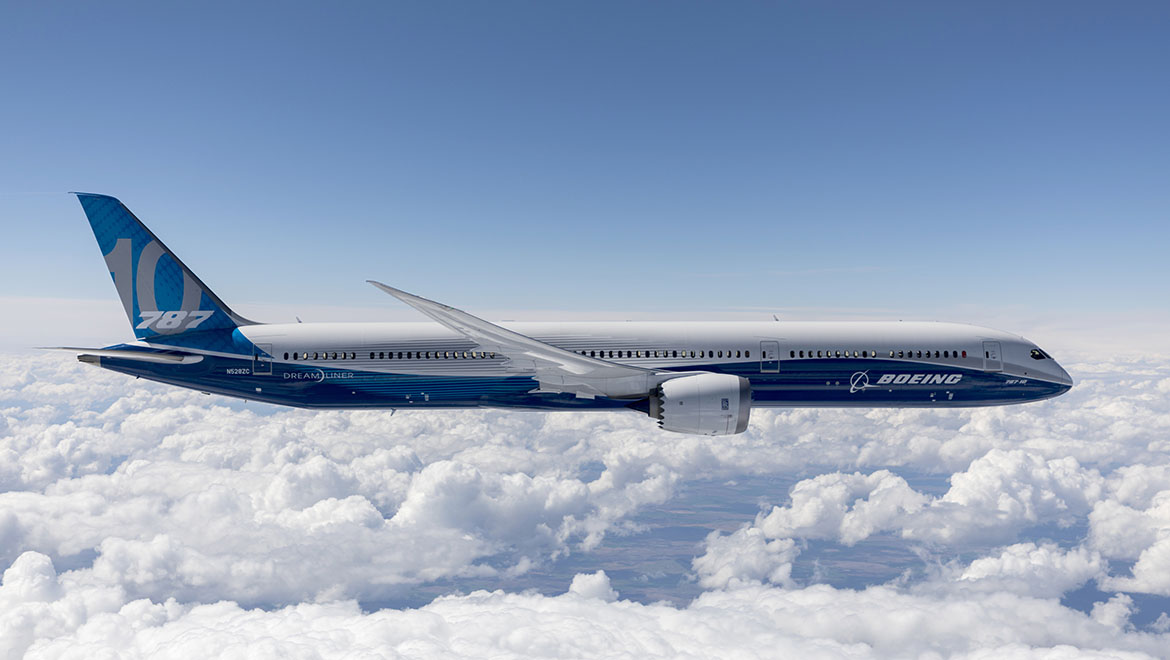 As Boeing’s 787 Dreamliner begins its second decade, the promises that this first composite airliner will fly farther, cheaper and with less fuel burn than previous generations have been clearly demonstrated. 630 aircraft are currently in service with 45 airlines on every continent, with Boeing citing 218 million passengers over 2.9 billion revenue miles during 6.5 million revenue flight hours.
But beyond the numbers, the 787 has opened up numerous new routes since its introduction, adding weight to Boeing’s arguments about the Dreamliner shifting the hub-and-spoke model towards point-to-point service, although Australia’s position within Airbus A330 range of China has meant that much of the 787 effect here has been adding new nonstop hub flights rather than new destinations.
This content is available exclusively to Australian Aviation members.
A monthly membership is only $5.99 or save with our annual plans.
- Australian Aviation quarterly print & digital magazines
- Access to In Focus reports every month on our website
- Unlimited access to all Australian Aviation digital content
- Access to the Australian Aviation app
- Australian Aviation quarterly print & digital magazines
- Access to In Focus reports every month on our website
- Access to our Behind the Lens photo galleries and other exclusive content
- Daily news updates via our email bulletin
- Unlimited access to all Australian Aviation digital content
- Access to the Australian Aviation app
- Australian Aviation quarterly print & digital magazines
- Access to In Focus reports every month on our website
- Access to our Behind the Lens photo galleries and other exclusive content
- Daily news updates via our email bulletin








Rhino
says:Great read. AA, would be good to see a similar article on A350 for comparison
John
says:Outstanding article. Three statements in particular stood out for me:-
1. All in all, “the 787 aircraft have been fundamental in the success of Jetstar’s long-haul operation. They are more fuel efficient, they require less maintenance and, importantly, our customers love them.”
2. Despite these improvements, however, the 787 has not brought an overall upgrade in passenger experience for most passengers – quite the opposite.
3. Indeed, the 787 in nine-abreast configuration gives the least amount of personal space of any widebody airliner in widespread service.
Having flown Jetstar 787 Melbourne to Bangkok a number of years ago all my subsequent trips to Bangkok have been with Thai Airways – that is how much I loved the Jetstar 787 experience.
Having also flown the Qantas 787 I am currently planning my upcoming trip to the UK by looking at Singapore Airlines, Cathay & FinnAir
David
says:John, what were the specific things you don’t like about the 787? And why don’t hyoid like them? What planes are you flying on with those other airlines you mention?
James
says:@ John
Is it the aircraft, or the particular airlines configuration that you don’t like?
It seems a bit ridiculous to be saying you don’t like the aircraft.
Brent Wilson
says:Flown Jetstar & ANA 787’s many times, love the products. Even when compared to Cathay & SIA A350’s I’d pick the 787 any day. Fresher Air, Plenty of legroom and width is fine (I’m just under 6″). Jetstar should definitely look at getting some -9 or 10’s!
Stuart Brown
says:I remain amazed that there’s no aircraft, that can fly Sydney to London, the level of modification with the current technology sets, would be minimal, 10 years after the introduction, of carbon fibre fuselage aircraft and aluminium lithium alloy fuselage aircraft. Hydrogen fuel is ever more an ideal fuel, for lighter aircraft, as it’s light, efficient, bulkier, but that is less a problem, with lighter structures per volume, allowing smaller wing surface area, per passenger, thus less drag, in somewhat more, like a lifting body shape. More than 600 787’s amazing, how time flies, I can still remember the 767, being the first carbon fibre winged airliner, way back in 1981.
Bill
says:It’s not that aircraft can’t do it, it’s doing it and being able to carry a payload that will bring a profit. Engine technology is almost at a point where Aus East Coast to LHR and JFK are very possible in the next 5 years and airframe not far behind, if not already there. The A350-900ULR will have its figures validated soon during flight testing to see exactly what it can do, and no doubt the engine manufacturers will find minor performance tweaks enhance fuel burn.
Hydrogen in liquid form requires too much additional weight to for storage at the expense of cargo and pax. As a gas, it would be too volatile and would require cylinders capable of storing large quantities at high pressure as the aircraft climbs to cruise altitude. Aviation will be the hardest industry to wean from fossil fuels simply because weight is the biggest driving factor.
Darren
says:Top notch article!
–
More of these?
Tutu
says:People are bigger because of better nutrition? It has little to do with nutrition, in fact people in the 1960s would typically have had far better nutrition due to the lack of processed foods and take away.
The more correct term is fatter and the reason is simply too much food.
Interesting to note that the Japanese had the widest seats but probably have the slimmest people.
Patrickk
says:Having been brought up in the 60s there was no shortage of junk food and too much sugar, salt, and fat in cooking, so maybe not better nutrition but maybe less disposable income to buy junk food.
NJP
says:Wow – time flys – I cannot believe it is 10 years ago the first plane was unveiled – 8th July 2008 to be precise – or 787 in US date format.
I flew Scoot 787 to Singapore which was a better experience than the QF330 back to SYD. I’m hesitant to fly in one for 17hours though
AndrewB
says:Top article, thank you. B787 is an amazing plane and while JetStar benefited from it, I am sure that there are many others who would never fly the 3-3-3 configuration that JX uses. I did it once and never again. Also AA 787 business class is better than QF business class in any plane and I recommend it.
Australiana
says:Oh come on @Brent. Who in their right mind would choose a 787 over a 350?
Someone who actually enjoys less room??
Mark
says:Wow that 10 years went quick. Good aircraft but I personally prefer the the A350.
KB planespotting
says:@ James are people not allowed to have an opinion.
James
says:@ KB Planespotting
Of course. But these people that think they can tell the difference in a type whilst not on the flight deck are having a laugh.
The airline chooses a CABIN CONFIGURATION. Not Boeing or Airbus.
Craigy
says:@ James Actually I can tell what major airliner I am on by simply looking at the overhead bins and overhead lights seat numbers etc. Despite cabin configuration choices of the airlines, there are some things that the manufacturers configuration is implemented
James
says:@ Craigy
No doubt. But do the shape (position, colour maybe) of overhead bins, lights, seat numbers make you say one is “better” than the other?
If so, then good.
Craigy
says:@ James . No and nowhere did I say that. At the end of the day it ones personal opinion hopefully based on their personal experience as to one aircraft being better than the other and not based on assumptions based on seat pitch and seat width.
James
says:Yeah ok Craigy.
Unless they are pilots or engineers, what are they basing it on?
Treb Retosf
says:10 years old?
The QANTAS spin doctors would have you believe that they were the first and that they were the first to receive the 787-9 aircraft!
Guys, don’t let the facts get in the way of the truth just to make your delayed decision look better. Yes it’s a game changer but so was the 777-300ER which QF never bought.
Rhino, I hear that the A350 is not measuring up with regards fuel economy with having those RR engines off the A380! Airbus car salesmen at it again.
Anton
says:Technically, the Boeing 787 doesn’t turn 10 until it reaches it’s 10th anniversary of when it entered service.