iscover
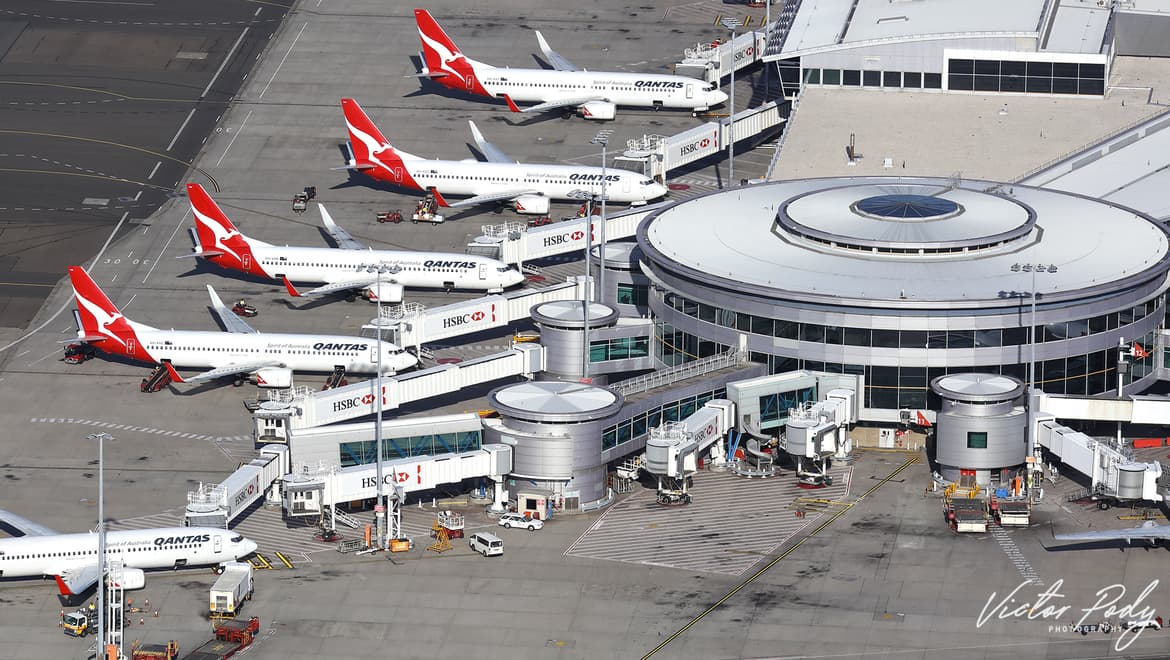
The ACCC has given the green light for a consortium of super funds to purchase Sydney Airport for $23.6 billion.
However, the competition commission’s chair, Rod Sim, used his verdict to attack how airports in general act as “natural monopolies” which have “significant market power and no price regulation”.
This content is available exclusively to Australian Aviation members.
A monthly membership is only $5.99 or save with our annual plans.
- Australian Aviation quarterly print & digital magazines
- Access to In Focus reports every month on our website
- Unlimited access to all Australian Aviation digital content
- Access to the Australian Aviation app
- Australian Aviation quarterly print & digital magazines
- Access to In Focus reports every month on our website
- Access to our Behind the Lens photo galleries and other exclusive content
- Daily news updates via our email bulletin
- Unlimited access to all Australian Aviation digital content
- Access to the Australian Aviation app
- Australian Aviation quarterly print & digital magazines
- Access to In Focus reports every month on our website
- Access to our Behind the Lens photo galleries and other exclusive content
- Daily news updates via our email bulletin
The takeover will become one of the largest in the country’s history, and see shareholders pocket $8.75 per share.
“The ACCC accepts that there is some minimal potential for competition between airports in relation to some aeronautical services, for example when an international airline seeks to enter the Australian market or when airports are located close to one another,” read its verdict.
“However, taking into account the minimal level of this potential competition, any lessening of competition from the proposed acquisition would not be substantial.”
The ACCC said during its review process it consulted with interested stakeholders including airlines, retailer groups, service providers and industry bodies.
It said some of those raised concerns that the purchase may add to the flow of information between airports with common ownership, which could give airports more bargaining power against airlines and other users of airports.
“We understand the stakeholder concerns, however, fundamentally the lack of competition between airports means that any such sharing of information between airports would not amount to a substantial lessening of competition, which is what the law requires before we can oppose a merger,” Sims said.

The ACCC added that market participants also argued the current monitoring regime is not effective in constraining Sydney Airport from charging excessive prices.
“The ACCC maintains the view that the threat of regulation under the current limited monitoring regime does not constrain the pricing behaviour of our airports,” Sims said.
“The absence of constraint ultimately leads to consumers paying higher airport passenger charges than they otherwise would.”
“We will continue to advocate for a regulatory regime that is effective, particularly as the aviation industry and the Australian economy recover from the COVID-19 pandemic,” Mr Sims said.
The deal for Sydney Airport is expected to be finalised in the new year and will need approval from at least 75 per cent of shareholders to proceed.
The board’s decision comes after two previously rejected bids of $8.25 and $8.45 put forward by the consortium, dubbed the Sydney Aviation Alliance Group (SAA).
Led by IFM Investors, along with QSuper, Global Infrastructure Partners, and most recently, AustralianSuper, the consortium has been eyeing to secure a sale of the airport since July.
In July, SAA proposed a $22 billion takeover bid to the airport’s operators, which the board quickly rejected and dubbed “opportunistic”.
The consortium then in August raised its bid up to $22.8 billion, which was again swiftly rejected, causing the super funds to threaten to leave the negotiation table altogether. However, SAA ultimately came back with a final offer of $23.6 billion, equating to $8.75 per share.
The news comes after Sydney Airport reported a $97.4 million half-year loss in the six months to 30 June 2021.
The airport cited the impact of COVID-19 and the sudden shutdown of domestic borders through the second half of the reporting period, as it saw a 33 per cent drop in revenue compared with the same period last year, which was also heavily impacted by COVID.