
 iscover
Brisbane Airport has defended its response to dealing with wasps a day after it was revealed the insect was behind a second serious safety incident.
The business said it had reduced their “activity” by 64 per cent and argued its “detailed research” was now helping other facilities around the world.
This content is available exclusively to Australian Aviation members.
A monthly membership is only $5.99 or save with our annual plans.
- Australian Aviation quarterly print & digital magazines
- Access to In Focus reports every month on our website
- Unlimited access to all Australian Aviation digital content
- Access to the Australian Aviation app
- Australian Aviation quarterly print & digital magazines
- Access to In Focus reports every month on our website
- Access to our Behind the Lens photo galleries and other exclusive content
- Daily news updates via our email bulletin
- Unlimited access to all Australian Aviation digital content
- Access to the Australian Aviation app
- Australian Aviation quarterly print & digital magazines
- Access to In Focus reports every month on our website
- Access to our Behind the Lens photo galleries and other exclusive content
- Daily news updates via our email bulletin
At Brisbane Airport, the pitot speed sensors of aircraft must be covered up to stop wasps from nesting during layovers.
However, there have been two serious safety incidents where personnel have forgotten to remove them before take-off.
Flying without speed indicators is extremely dangerous, and in 1996 was behind two fatal crashes that killed 200 people.
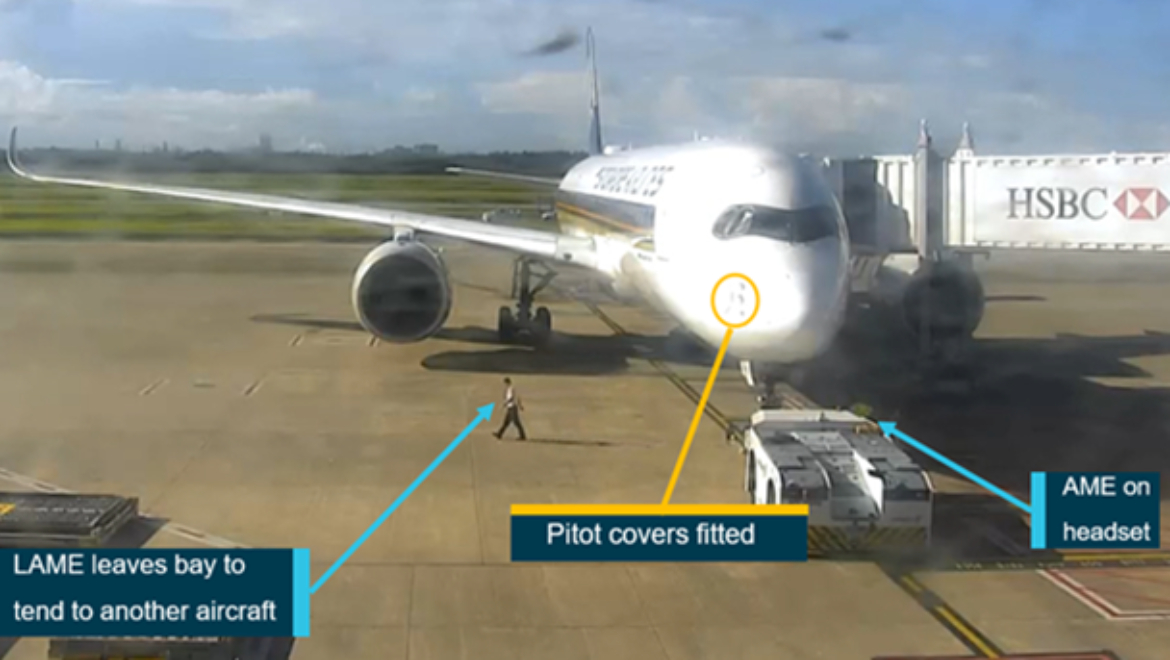
On Friday, Australian Aviation reported a fresh wasp cover incident involving a Singapore A350, which alarmingly came two months after the ATSB released its four-year investigation into a near identical situation involving an A330.
It led to fears aviation personnel were failing to heed the repeated warnings of the problem.
On Saturday, Brisbane Airport said it had implemented a “science-based Integrated Vegetation Management program” that had reduced wasp activity by almost two thirds in the domestic and international terminals.

It also claimed a 94 per cent reduction in “wasp food sources”.
“The research into these wasps being done by Brisbane Airport is helping airports around the world. We’ve also suggested to aircraft manufacturers they investigate design changes to make components less attractive to nesting wasps,” said Peter Dunlop, head of airside operations at Brisbane Airport.
Brisbane’s staunch defence comes after an ATSB report into the latest incident revealed that the two aircraft maintenance engineers tasked with removing the covers failed to do so.
The potential safety incident was only prevented because a quick-thinking aircraft refueller on an adjacent bay noticed the covers were on and alerted the engineers.
The original, more serious incident in 2018 saw a Malaysian Airlines A330 actually take off without speed information.
The ATSB report concluded that a catalogue of basic errors from various people led to the covers not being removed.
In particular, it found:
- The Malaysia Airlines flight crew, engineers and dispatch coordinator didn’t conduct the vital pre-departure checks properly, or, in some cases, even attempt them at all;
- The certifying engineer saw the covers were left on early in the turnaround but later “forgot about them”;
- The captain did not “assertively” announce the presence of a problem when it was detected, delaying the first officer’s response. There was then “limited coordination between them” which reduced their ability to interpret the situation and abort the take-off; and
- It concluded “several individuals on the night” all acted as though the conduct of aircraft inspections was “someone else’s responsibility”.







Captain Sensible
says:Surely the manufacturers can make a “clear sensor” alert as a fail safe. I can’t turn on the ignition or get out of Park in the car without my foot on the brake. Cant be that hard….why wipe out the wasps?
Ian
says:Pitots an be designed so as not to get block and first saw, them late 80s new aircraft.
Alf Allen
says:Had the LAME given the aircraft a ‘once over’ look as he walked away, the covers would have been obvious.
Mike Ratne
says:The LAME & AME should be charged with dereliction duty by the courts and then fired. What if the “Refueler” did not notice this indifferent attitude to safety at Brisbane Airport. The Airport Safety Officer should also answer for the lax performance of his staff and suspended.
To talk about handling the wasp problem by vegetation control is neither here nor there and does not address the incompetent behaviour of the LAME and AME. This response from ‘Brisbane Airport ‘beggars belief!