 iscover
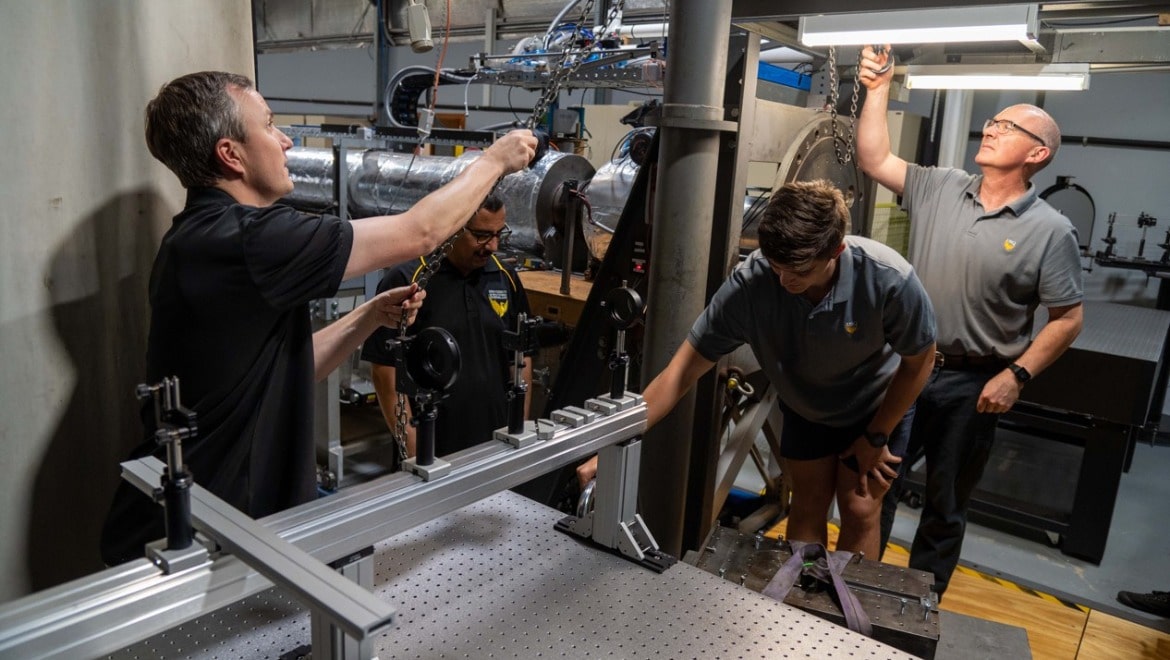
The University of Southern Queensland (USQ) has been awarded a $1 million grant to develop new ways of monitoring test flights of space rockets and hypersonic aircraft.
This content is available exclusively to Australian Aviation members.
A monthly membership is only $5.99 or save with our annual plans.
- Australian Aviation quarterly print & digital magazines
- Access to In Focus reports every month on our website
- Unlimited access to all Australian Aviation digital content
- Access to the Australian Aviation app
- Australian Aviation quarterly print & digital magazines
- Access to In Focus reports every month on our website
- Access to our Behind the Lens photo galleries and other exclusive content
- Daily news updates via our email bulletin
- Unlimited access to all Australian Aviation digital content
- Access to the Australian Aviation app
- Australian Aviation quarterly print & digital magazines
- Access to In Focus reports every month on our website
- Access to our Behind the Lens photo galleries and other exclusive content
- Daily news updates via our email bulletin
The money from the Australian Research Council will be used to develop ‘diagnostic’ instruments that could be placed in the air, on the ground or even on high-flying drones.
While hypersonic technology — defined as flying at least five times the speed of sound — is nothing new, countries are currently in an arms race to develop the next generation of missiles that are so manoeuvrable in mid-air they can’t be intercepted or detected.
The advances are also being used to create scramjet-powered, hypersonic spaceplanes, which could one day provide an alternative to rockets for taking satellites into space. USQ already has its own pioneering wind tunnel that can simulate the effect of Mach 5 speeds on vehicles and the heat it generates.
Professor David Buttsworth, from the university’s Institute for Advanced Engineering and Space Sciences, will lead the project.
“Aerospace flight testing is essential for assessing the reliability of space-access technologies including reuseable rockets and hypersonic air-breathing systems,” he said
“These tests give us vital optical data in video and scientific formats, and we’re looking at ways to gain even more insight from these flights.”

There are currently two major ways it’s thought manoeuvrable hypersonic vehicles and missiles could work.
The first, known as a hypersonic cruise missile, would see a rocket blast to Mach 5 before using an air-breathing engine, or scramjet, to maintain its momentum. Lockheed Martin has already conducted successful test flights of its own Hypersonic Air-breathing Weapon Concept, known as HAWC, that went beyond Mach 5 and hit a peak altitude of 65,000 feet.
The second, known as a glide vehicle, sees a rocket blast into the sky before releasing a separate hypersonic missile that has built up enough velocity to travel under its own speed. The two-step system means it can cruise along in the upper atmosphere with enough atmosphere to maintain lift but without too much to create drag.
Examples include Russia’s Avangard, the US Navy’s Conventional Prompt Strike system, and China’s aforementioned Dongfeng-17.
USQ’s team will also develop new ways to work out the aerodynamic and thermal conditions experienced during high-speed flight.
“This work has the potential to accelerate the research and development pathways for Australian enterprises and will designate our country as a prime destination for international aerospace businesses,” said Buttsworth.
The research team includes Dr Fabian Zander, who appeared on the podcast of Australian Aviation’s sister brand, Space Connect, which you can listen to above.