
 iscover
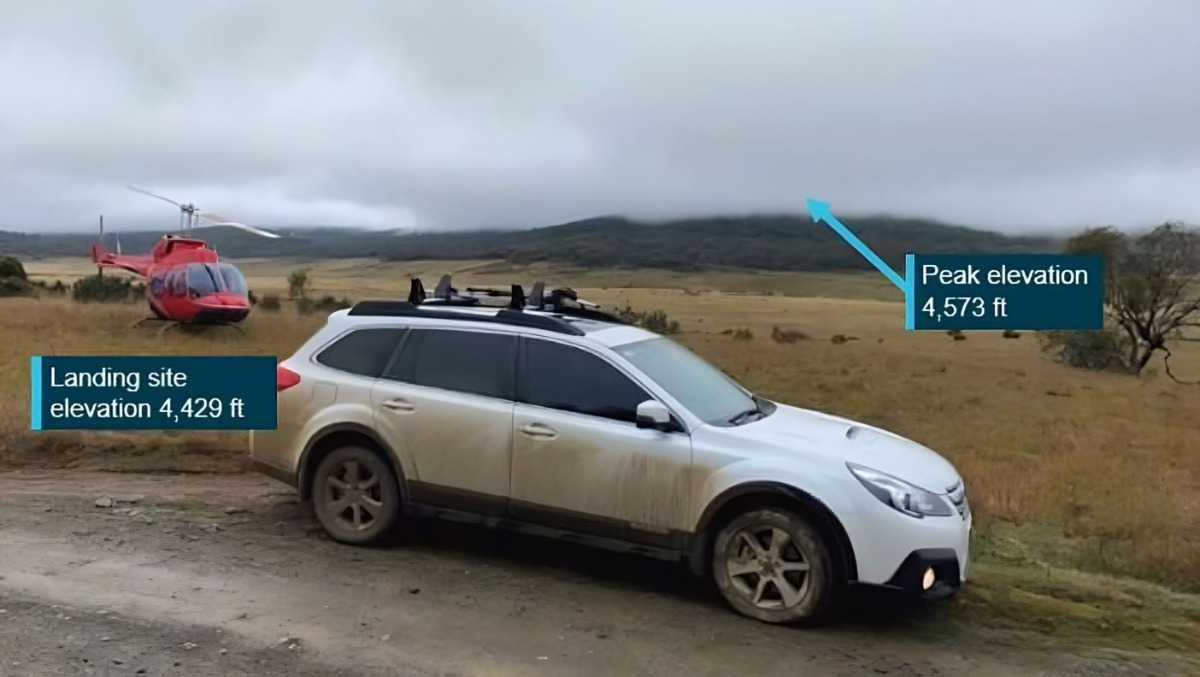
The pilot of a Bell 206L-4 LongRanger involved in a fatal crash caused by flying in bad weather initially landed before taking off again.
Australian Transport Safety Bureau (ATSB) chief commissioner Angus Mitchell said the pilot initially made the right decision but “for reasons we will never fully comprehend”, pushed on to fly in a “dangerous environment”.
This content is available exclusively to Australian Aviation members.
A monthly membership is only $5.99 or save with our annual plans.
- Australian Aviation quarterly print & digital magazines
- Access to In Focus reports every month on our website
- Unlimited access to all Australian Aviation digital content
- Access to the Australian Aviation app
- Australian Aviation quarterly print & digital magazines
- Access to In Focus reports every month on our website
- Access to our Behind the Lens photo galleries and other exclusive content
- Daily news updates via our email bulletin
- Unlimited access to all Australian Aviation digital content
- Access to the Australian Aviation app
- Australian Aviation quarterly print & digital magazines
- Access to In Focus reports every month on our website
- Access to our Behind the Lens photo galleries and other exclusive content
- Daily news updates via our email bulletin
The incident took place on 3 April in Kosciuszko National Park and killed both passengers in the helicopter.
“It is highly likely these cloud and visibility conditions resulted in the pilot experiencing a loss of visual reference and probably becoming spatially disoriented,” said Mitchell. “Tragically, this led to a loss of control of the helicopter and an unsurvivable collision with terrain.”
The final ATSB report revealed how one of seven helicopters taking part in a flying tour, a Bell 206L-4 LongRanger, registered VH-PRW, departed with a pilot and passenger on board, for a visual flight rules (VFR) flight from a private property at Majura, near Canberra, to Mangalore, Victoria, with a planned refuelling stop in Tumut.
The weather forecast indicated low cloud, rain and associated reduced visibility on the planned route, and two of the helicopters diverted to Wagga Wagga, due to weather while four others landed near Wee Jasper, to Canberra’s north-west.
The pilot of VH-PRW elected to continue until they encountered poor weather conditions and landed in open terrain alongside Long Plain Road in the Brindabella region, west of Canberra and to the south of Wee Jasper, shortly before noon, the investigation report details.
About three hours later, at 14:53 local time, the helicopter departed the interim landing site at low level, in overcast conditions with low cloud and light rain.

At about 1525, recorded data showed that the helicopter commenced a rapid climb and shortly after, entered a steep left descending turn, which continued until it impacted terrain at an elevation of 4,501 ft.
A search was initiated the next day, with the accident site located later that evening. The helicopter was destroyed, and both occupants were fatally injured.
The pilot held a private pilot licence (helicopter) and did not hold an instrument rating, and the helicopter was not approved for instrument flight.
“The pilot initially made the right decision and landed the helicopter,” said Mitchell.
“However, you’re only as safe as your last decision, and the pilot’s then decision to launch again and push on — for reasons that we will never fully comprehend — put the helicopter into a dangerous environment with powerful and misleading orientation sensations and no visual cues.”
The ATSB said the investigation is the second this month into an accident where a VFR pilot likely encountered low visibility conditions, before becoming spatially disorientated leading to a loss of control of their aircraft.
The ATSB is also currently investigating other fatal accidents where the weather conditions are under consideration, including the collision with terrain of an Airbus Helicopters EC130 T3 near Mount Disappointment, Victoria on 31 March 2022 where a pilot and four passengers were killed.
In 2018, following the final report release into another fatal helicopter accident involving VFR into IMC conditions, the ATSB, in conjunction with CASA and the Australian Helicopter Industry Association launched the ‘Don’t Push it, LAND IT — when it’s not right in flight’ safety campaign encouraging helicopter pilots to conduct a precautionary landing rather than push on into abnormal situations.
“Don’t push on,” Mitchell urged visual flight rules pilots.
“Pushing on into cloud and low visibility when you do not hold the appropriate rating and experience carries a significant risk of severe spatial disorientation and can affect any pilot, no matter what their level of experience [is].”