
 iscover
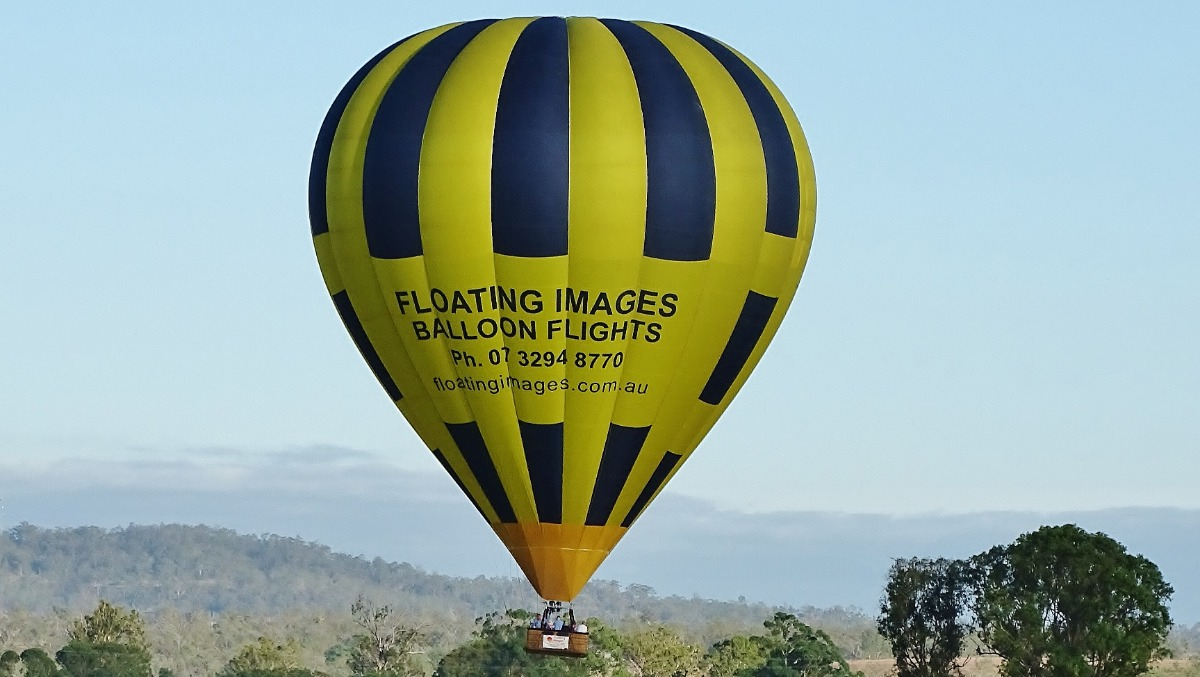
A sightseeing balloon with nine passengers in its basket crashed into a tree last year after encountering fog in Ipswich, Queensland.
An ATSB report revealed the pilot didn’t follow visual flight rules and entered an area where visibility was reduced to just 10 metres. When the tree was spotted, it was too late to steer away.
While nobody onboard was injured, 19 of the balloon’s 480 sewn panels required either repair or replacement.
This content is available exclusively to Australian Aviation members.
A monthly membership is only $5.99 or save with our annual plans.
- Australian Aviation quarterly print & digital magazines
- Access to In Focus reports every month on our website
- Unlimited access to all Australian Aviation digital content
- Access to the Australian Aviation app
- Australian Aviation quarterly print & digital magazines
- Access to In Focus reports every month on our website
- Access to our Behind the Lens photo galleries and other exclusive content
- Daily news updates via our email bulletin
- Unlimited access to all Australian Aviation digital content
- Access to the Australian Aviation app
- Australian Aviation quarterly print & digital magazines
- Access to In Focus reports every month on our website
- Access to our Behind the Lens photo galleries and other exclusive content
- Daily news updates via our email bulletin
The ATSB’s director of transport safety, Stuart Macleod, said, “As balloons can only manoeuvre vertically and significant time may be required to transition from a descent to a climb, they have limited capability to avoid obstacles.
“Therefore, to reduce the collision risk if a balloon enters an area of visibility less than that permitted by the visual flight rules, pilots should ensure that an immediate recovery is commenced.”
The full report revealed the Floating Images Australia-operated Kavanagh E-240 balloon was conducting a scenic flight near Ipswich, Queensland, on the morning of 8 October 2021, with a pilot and nine passengers on board.
About 55 minutes into the flight, to the south of the RAAF Base Amberley, the pilot commenced a descent to locate a suitable landing area, during which the balloon entered an area of localised fog where visibility was reduced to 10 metres.
The pilot continued the descent into the fog until a tree was observed in the path of the balloon. The pilot attempted to avoid the tree by initiating a climb.
However, due to the 20–30 seconds required before the descent could be arrested and a climb commenced, there was insufficient time for the tree to be avoided.

The balloon came to rest on the side of the tree, damaging the lower part of the balloon envelope.
The pilot subsequently climbed the balloon off the tree and above the fog. The flight continued to an uneventful landing in a nearby paddock that was clear of fog near the Ipswich suburb of Yamanto.
“The ATSB investigation found that, contrary to the visual flight rules visibility requirement, the pilot entered an area of reduced visibility in which the visibility was 10 metres,” said Macleod.
“This did not allow sufficient time to complete an avoidance manoeuvre when an obstacle was observed. As a result, the balloon collided with a tree and the balloon envelope was damaged.”
The ATSB said that in some circumstances, balloons are permitted to fly in significantly lower visibility than other types of aircraft. While this is mainly due to their inherently low flight speed, it also considerably reduces the available time to see obstacles.







Craithie
says:Why anybody would ever get on-board one of these hot air balloons, I’ll never know.
They don’t have an ‘engine’, have restricted movements’, one of which is down, uncontrolled.
Remember well several people killed at ASP when two of them collided.
The folk in this article were very fortunate not to have been injured, or killed.
Will stay with jet engined powered flight, as have done so for many a long time, quite happily.
John D
says:Interesting to know what the CASA dudes would have done in the pilot’s place. Sounds to me the pilot was doing the right thing, descending for a landing when the fog was seen, and just the victim of bad luck. What was the alternative? Climb and hope the fog dissipates before the gas runs out? And end up in a worse situation if it doesn’t?