iscover
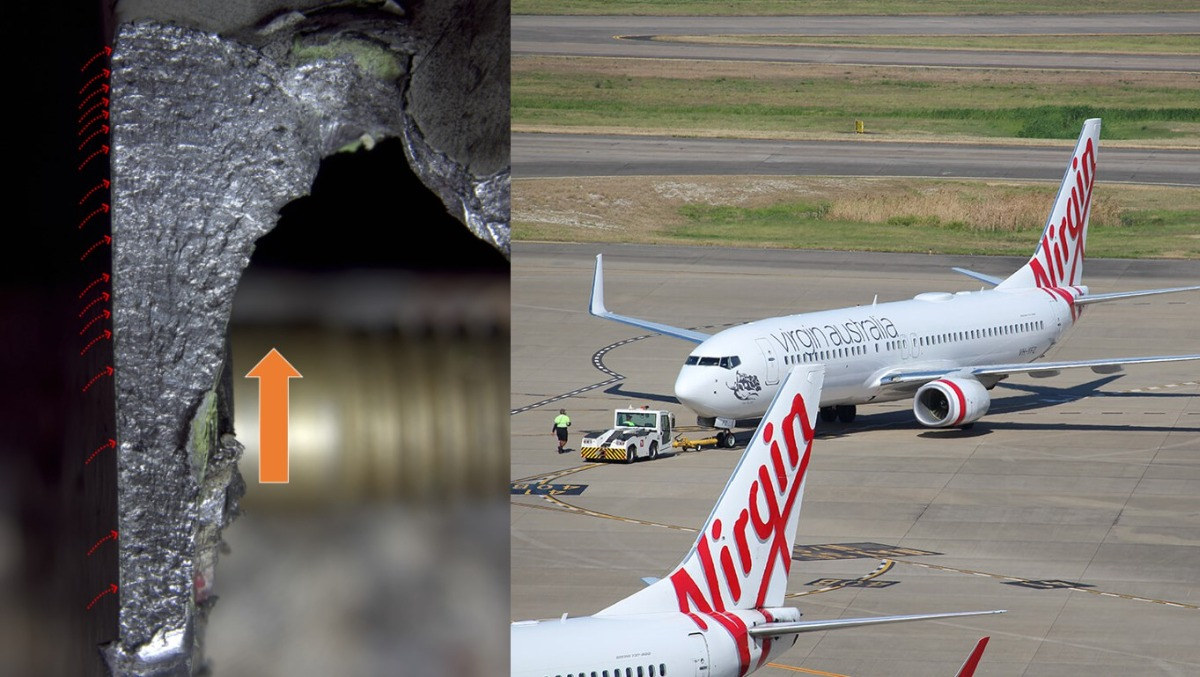
The ATSB has criticised Boeing after it emerged a common cracking issue on its 737 wing flaps is not included in the standard safety inspection recommended for the aircraft.
Australia’s safety investigator discovered the problem after a Virgin aircraft rolled to the right during a flight from the Gold Coast to Sydney in April 2022.
This content is available exclusively to Australian Aviation members.
A monthly membership is only $5.99 or save with our annual plans.
- Australian Aviation quarterly print & digital magazines
- Access to In Focus reports every month on our website
- Unlimited access to all Australian Aviation digital content
- Access to the Australian Aviation app
- Australian Aviation quarterly print & digital magazines
- Access to In Focus reports every month on our website
- Access to our Behind the Lens photo galleries and other exclusive content
- Daily news updates via our email bulletin
- Unlimited access to all Australian Aviation digital content
- Access to the Australian Aviation app
- Australian Aviation quarterly print & digital magazines
- Access to In Focus reports every month on our website
- Access to our Behind the Lens photo galleries and other exclusive content
- Daily news updates via our email bulletin
The ATSB said the aerospace giant “does not agree” that the particular issue with fatigue cracks requires safety action because it has never led to an accident.
However, the ATSB has urged Boeing to reconsider, arguing that any “reduction in safety margins” for passenger-carrying aircraft warrants improvement.
“A detailed inspection of the flap actuation system already exists, and while it includes the aft flap rollers, it does not include the cartridges that house them,” said the ATSB’s chief commissioner, Angus Mitchell.
“Inclusion of the cartridges in the detailed inspection would provide the greatest opportunity for fatigue cracks to be identified prior to failure.”
It comes after the ATSB released the results of an investigation that found multiple occurrences involving fatigue cracks and failures on 737 wing flaps in a location not included in the detailed flap actuation system inspection.
The investigation stemmed from an incident involving a 737-800, VH-YFZ, flying earlier this year.

“Immediately after take-off, the pilot noticed the aircraft tended to roll to the right, and so trimmed the rudder to keep wings level,” Mitchell said.
The aircraft no longer required trim when the flaps were retracted for cruise, but the issue returned when the flaps were extended for landing into Sydney.
“A walk-around inspection after the flight found the outboard aft flap on the left wing had not completely retracted, and a subsequent inspection found several components in the aft flap actuation system had failed,” Mitchell said.
The ATSB determined that a pre-existing fatigue crack progressed through the aft flap’s inboard programming roller cartridge, resulting in component failure.
“The last general visual inspection had been carried out on VH-YFZ’s left outboard flap, according to Boeing’s specifications, in October 2020, and no defects were found,” Mitchell said.
“While it could not be determined whether the fatigue crack was present at that inspection, 10 other instances of cracking and/or failure of the programming roller were reported to Boeing between 2017 and 2022, and at least six of these were old enough to have been inspected several times prior to failure.
“Significantly, the area in which the fatigue cracks developed was not included in the detailed inspection that Boeing specified for the flap actuation system.”
The ATSB said that Boeing has advised that it does not agree that this issue warrants safety action – noting that a review of prior failures showed that aeroplane-level effects were correctly mitigated by flight crews, and the affected aircraft landed without further incident.
Nonetheless, the ATSB has issued a safety recommendation to the planemaker to take action to increase the detection of the fatigue cracks.