iscover
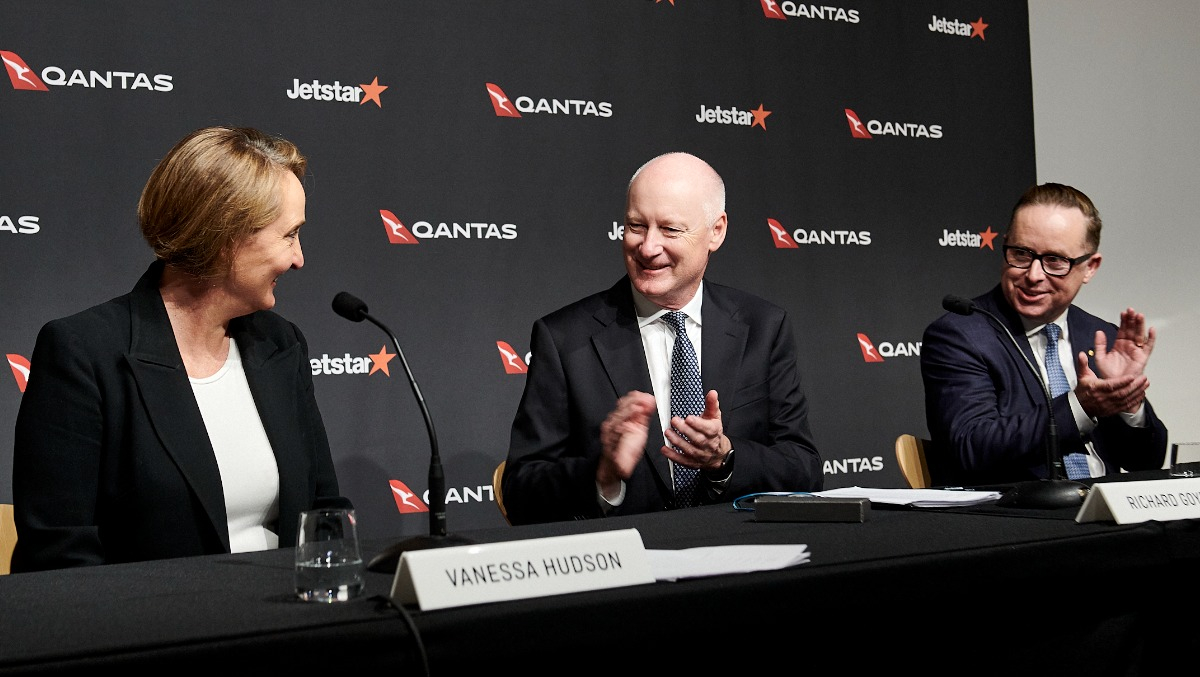
Former Qantas chairman Richard Goyder has backed ex-CEO Alan Joyce’s “command and control” management style, despite its criticism in a governance review of the airline.
Speaking for the first time since the report’s publication, Goyder has argued a top-down approach was necessary during COVID-19 but agreed with criticism the company didn’t do enough to revert to normal when the pandemic ended.
This content is available exclusively to Australian Aviation members.
A monthly membership is only $5.99 or save with our annual plans.
- Australian Aviation quarterly print & digital magazines
- Access to In Focus reports every month on our website
- Unlimited access to all Australian Aviation digital content
- Access to the Australian Aviation app
- Australian Aviation quarterly print & digital magazines
- Access to In Focus reports every month on our website
- Access to our Behind the Lens photo galleries and other exclusive content
- Daily news updates via our email bulletin
- Unlimited access to all Australian Aviation digital content
- Access to the Australian Aviation app
- Australian Aviation quarterly print & digital magazines
- Access to In Focus reports every month on our website
- Access to our Behind the Lens photo galleries and other exclusive content
- Daily news updates via our email bulletin
“That [criticism] is absolutely valid,” he told The Australian Financial Review. “We had tightened up on so many things, nobody could spend a cent, it was all about liquidity. The number one rule of business: don’t run out of cash.
“As we came out, we had probably a coincidence of people who decided not to come back to Qantas, and we still had very tight controls because we needed to, because the balance sheet had been really knocked about.
“We probably didn’t give our frontline people the capacity to deal with the myriad issues which came along. Our customers, rightly, felt that we weren’t responsive enough. In hindsight, you would do it differently, but it was difficult at the time.”
The views of the former chairman were backed up by his recently appointed replacement, John Mullen, who, in the same article, argued that COVID-19 required “some pretty hard decisions to be made very quickly”.
“In that environment, I think the command and control culture as it was referred to, served us very well,” he said. “Unfortunately, and with hindsight, that continued.”
The comments come after the governance review, penned by business adviser Tom Saar, concluded that a major cause of Qantas’ recent problems was a “top-down leadership with a dominant and trusted CEO, leading to insufficient listening and low speak up”.

“There was too much deference to a long-tenured CEO who had endured and overcome multiple past operational and financial crises,” the report read.
“The mode of engagement between the Board and Management did not always facilitate robust challenge on some issues. Issues could have been brought to the board earlier for input, and reporting could have included more analysis of options and risks for Board debate.”
Saar’s report also found that Qantas’ “strong safety culture was not representative of the leadership culture of the Group as a whole”, board engagement with management “did not always achieve the right balance between support and challenge”, impacts of the COVID-19 crisis “were not always fully appreciated”, and “external communications were at times combative, which exacerbated issues”.
However, it also said that Qantas had instigated the review out of a “genuine desire to improve the Group and ensure the mistakes of the past led to lessons learned and improved governance”.
“Many of the actions taken by Qantas in response to the recommendations are complete or well underway,” he said.
“While some of the recommendations will take some time to embed across the organisation if the current momentum is maintained, my expectation is that tangible benefits will occur within a short period.”
Joyce left the role of Qantas CEO last September, two months before he had initially planned to step down, amid a wave of bad press for the airline. The board later announced that his final pay packet would be slashed by over $9 million.