
 iscover
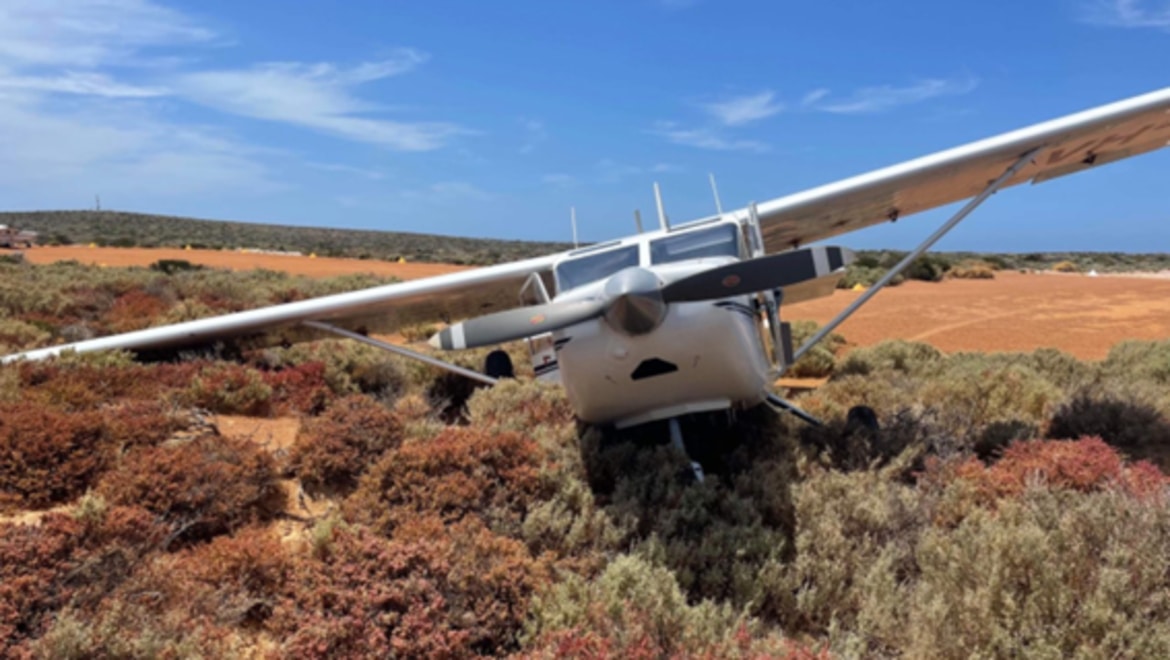
An ATSB investigation has found that rushed preparations were a key factor in an Airvan overrunning a runway by 15 metres and coming to a halt in shrubland.
The GA-8 first touched down 300 metres further than intended, leading to the aircraft becoming damaged and its landing gear detaching.
This content is available exclusively to Australian Aviation members.
A monthly membership is only $5.99 or save with our annual plans.
- Australian Aviation quarterly print & digital magazines
- Access to In Focus reports every month on our website
- Unlimited access to all Australian Aviation digital content
- Access to the Australian Aviation app
- Australian Aviation quarterly print & digital magazines
- Access to In Focus reports every month on our website
- Access to our Behind the Lens photo galleries and other exclusive content
- Daily news updates via our email bulletin
- Unlimited access to all Australian Aviation digital content
- Access to the Australian Aviation app
- Australian Aviation quarterly print & digital magazines
- Access to In Focus reports every month on our website
- Access to our Behind the Lens photo galleries and other exclusive content
- Daily news updates via our email bulletin
The investigation concluded an emergency radio beacon positioned near the pilot’s right hip prevented the flap lever from being fully extended while also pointing out that the pilot still didn’t apply maximum braking. Neither the pilot nor seven passengers were injured in the incident on East Wallabi Island, off the Mid West coast of WA.
“This accident emphasises the need for careful flight preparation,” said the ATSB’s director of technical safety, Stuart Macleod.
“Taking time to confirm that all required actions have been completed prior to departure minimises the chance of in-flight complications.”
An ATSB investigation into the accident details that on 26 December 2021, the Geraldton Air Charter operated GA-8 Airvan, VH-WSB, was conducting an air-transport flight from Geraldton.
While initially planning for six passengers, the pilot decided to add a seventh from another flight shortly before departure and later reported this rearrangement resulted in rushed preparations.
Earlier in the day, the pilot had flown a Cessna 172 with a personal emergency position indicating radio beacon (EPIRB) device positioned on their right hip.

The pilot knew the EPIRB’s positioning on their right hip could prevent the full extension of the Airvan’s flap lever – which sits to the right of the pilot’s seat – but they forgot to move the EPIRB to their left hip during the rushed flight preparations.
Approaching East Wallabi Island about 30 minutes into the flight, the pilot positioned the aircraft to join the right base leg of the circuit for runway 36 and extended the first stage of flap by moving the flap lever.
“When the pilot turned onto the final leg of the circuit and attempted to select full flap for the landing, the EPIRB obstructed the lever’s movement and prevented it from locking into the full flap position,” said Macleod.
Further attempts to select full flap were unsuccessful.
“The investigation notes the pilot did not consider a go-around to allow for troubleshooting or repositioning of the EPIRB and continued the approach with just the first stage of flap extended.”
The aircraft floated more than the pilot expected during the landing flare and touched down about midway along the runway – almost 300 metres beyond the original landing aim point and about 350 metres from the runway’s end.
Macleod also noted the reduced drag of the first stage flap setting, possibly combined with a higher-than-normal approach speed, led to the longer float.
“While a go-around should again have been considered at this stage, from the touch-down point, it was still possible to stop the aircraft in the remaining runway using maximum braking,” Macleod said.
“However, possibly due to prioritising retracting the flaps after landing, and the pilot not immediately recognising the risk of an overrun, maximum braking was not applied until there was insufficient runway remaining.”
Macleod added the accident also underlines the importance of commencing a missed approach early when an approach and landing deviate from the plan, and a safe landing cannot be assured.
“Pilots should always have a clearly defined decision point where they can go around if they’re not confident that a safe landing is achievable,” he said.
“This is especially relevant when landing on shorter runways.”