iscover
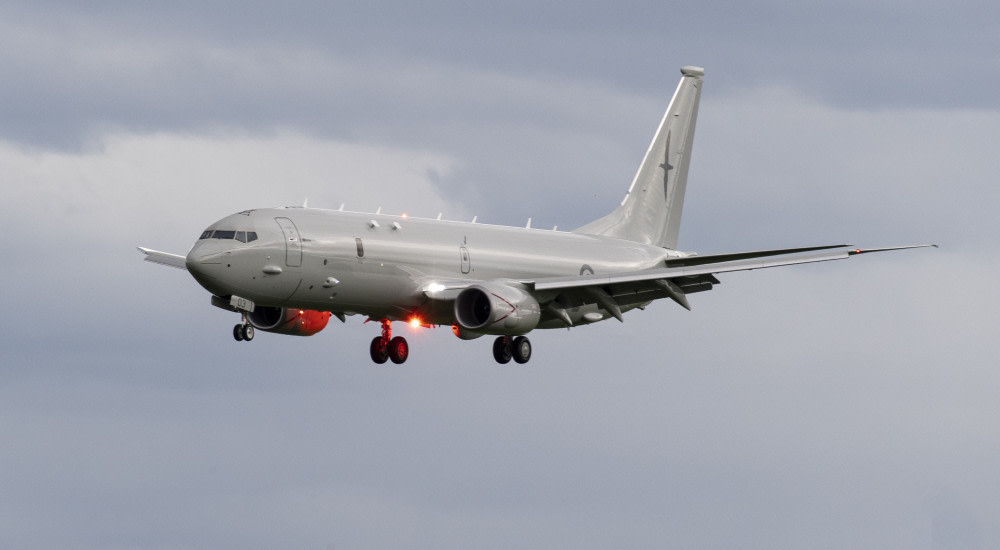
The New Zealand Defence Force has deployed maritime patrol aircraft to monitor ship-to-ship transfers and resources being illegally delivered to North Korea.
This content is available exclusively to Australian Aviation members.
A monthly membership is only $5.99 or save with our annual plans.
- Australian Aviation quarterly print & digital magazines
- Access to In Focus reports every month on our website
- Unlimited access to all Australian Aviation digital content
- Access to the Australian Aviation app
- Australian Aviation quarterly print & digital magazines
- Access to In Focus reports every month on our website
- Access to our Behind the Lens photo galleries and other exclusive content
- Daily news updates via our email bulletin
- Unlimited access to all Australian Aviation digital content
- Access to the Australian Aviation app
- Australian Aviation quarterly print & digital magazines
- Access to In Focus reports every month on our website
- Access to our Behind the Lens photo galleries and other exclusive content
- Daily news updates via our email bulletin
The four-week deployment announced late last month will see the aircraft, likely to include a Poseidon, and crew carrying out airborne surveillance off the waters around east Asia to capture evidence of ship-to-ship transfers of resources used for the North Korean nuclear and ballistic missile programs.
The deployment supports the multinational Pacific Security Maritime Exchange coalition formed in 2018 to monitor United Nations Security Council (UNSC) sanctions.
Naval vessels, maritime patrol aircraft and staff officers are deployed by the coalition nations and coordinated by the Enforcement Coordination Cell based in Yokosuka Naval Base in Japan.
“New Zealand is committed to maintaining regional peace and security by upholding the rules-based international system, and the UNSC sanctions are the international community’s best way of encouraging North Korea to denuclearise and return to diplomacy,” Commander Joint Forces New Zealand Major General Rob Krushka said.
“Our maritime patrol aircraft and ships have been part of this multinational effort to monitor the sanctions since 2018, and there will be further deployments of our assets to support the operation later this year.”
In addition, late last month, North Korea officially launched its guided missile destroyer, Choe Hyon, in a possible push towards the establishment of a traditional blue water fleet.

The Choe Hyon, the largest warship ever produced by North Korea and largest warship in the Korean Peoples’ Navy, will serve as the lead vessel of the Korean People Navy’s first class of destroyers.
Statements published by North Korean officials allege that the destroyer features significant anti-air, anti-ship and anti-submarine capabilities – and is reportedly capable of launching hypersonic strategic cruise missile and tactical ballistic missiles.
The ship visibly features a Russian Pantsir-M air defence system and is reported to feature as many as 44 vertical launch system cells (surface-to-air missiles), 30 large VLS cells (surface-to-surface missiles), close-in weapons systems, a 127mm main gun and helicopter flight deck.