
 iscover
Warning: Undefined array key "image-size-770" in /data/www/upgrade/australianaviation.com.au/httpdocs/wp-content/themes/australianaviation/functions.php on line 1310
Warning: Trying to access array offset on null in /data/www/upgrade/australianaviation.com.au/httpdocs/wp-content/themes/australianaviation/functions.php on line 1310
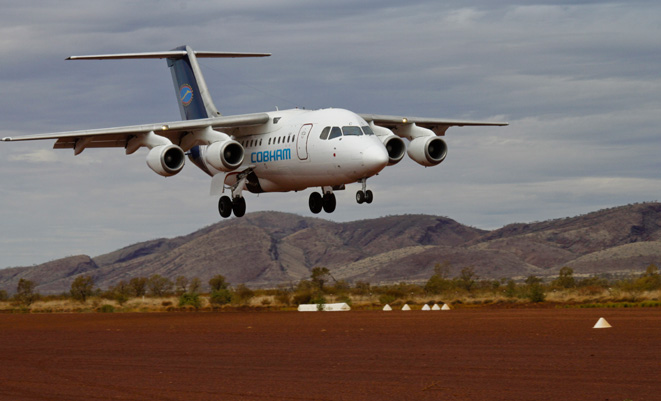
European regulators have signed off on an increase in maximum takeoff weight (MTOW) for operators of the BAe 146-100/200 regional jet on unpaved runways, following the results of a two-year trial.
BAE Systems said the European Aviation Safety Authority (EASA) has removed restrictions on MTOW that were previously in place for the aircraft when used on unpaved runways.
This content is available exclusively to Australian Aviation members.
A monthly membership is only $5.99 or save with our annual plans.
- Australian Aviation quarterly print & digital magazines
- Access to In Focus reports every month on our website
- Unlimited access to all Australian Aviation digital content
- Access to the Australian Aviation app
- Australian Aviation quarterly print & digital magazines
- Access to In Focus reports every month on our website
- Access to our Behind the Lens photo galleries and other exclusive content
- Daily news updates via our email bulletin
- Unlimited access to all Australian Aviation digital content
- Access to the Australian Aviation app
- Australian Aviation quarterly print & digital magazines
- Access to In Focus reports every month on our website
- Access to our Behind the Lens photo galleries and other exclusive content
- Daily news updates via our email bulletin
Effectively, this has added about four tonnes of payload, which equated to about 40 more passengers, an extra 700nm of range, or a mix of the two.
“This approval is now to be sought for other variants of the BAe 146/Avro RJ operating to other unpaved runways in Australia,” BAE Systems said in a statement.
While the BAe 146 and Avro RJ are certified for use on unpaved runways, and can be fitted with a BAE Systems unpaved runway protection kit to protect the aircraft from damage due to runway debris, regulations required a reduction in maximum takeoff weight.
“This reduction was because of an increased structural ‘bump factor’ which was applied to maintain the same factored ground loads as for paved runway loads,” BAE Systems Regional Aircraft head of flight operations support Stephen Morrison said.
During the two-year trial, BAE Systems placed accelerometers at three locations in the airframe of a Cobham Aviation Services BAe 146 flying between Perth and Kambalda to collect data on ‘G’ accelerations at both paved and unpaved runways.
The data collected showed there was “no significant difference in paved and unpaved runway operations, so supporting the removal of the ‘bump factor’.”

“Methodology and substantiation reports had to be prepared for and then verified by an EASA structures specialist and we received approval for this major change in mid-January,” Morrison said.
“Now we have the principles and methodology established, we can work with our operators to get approvals for their unpaved runway operations on a case by case basis.”
Cobham vice president and general manager for regional services Ryan Both said the company was seeking to conduct further tests at other unpaved runways across Australia using a combination of its BAe 146-100/200s and newer Avro RJ85 aircraft.
“Being able to operate will full payloads from a range of unpaved runways for our mining resource clients would increase our competitive advantage in a market where we offer something that other operators do not,” Both said.
“This approval is great news for Cobham.”
BAE said there was growing demand for operations from unpaved runways and older generation aircraft that have been used on these sorts of routes were nearing the end of their service lives.