 iscover
Warning: Undefined array key "image-size-770" in /data/www/upgrade/australianaviation.com.au/httpdocs/wp-content/themes/australianaviation/functions.php on line 1310
Warning: Trying to access array offset on null in /data/www/upgrade/australianaviation.com.au/httpdocs/wp-content/themes/australianaviation/functions.php on line 1310
Warning: Undefined array key "image-size-770" in /data/www/upgrade/australianaviation.com.au/httpdocs/wp-content/themes/australianaviation/functions.php on line 1310
Warning: Trying to access array offset on null in /data/www/upgrade/australianaviation.com.au/httpdocs/wp-content/themes/australianaviation/functions.php on line 1310
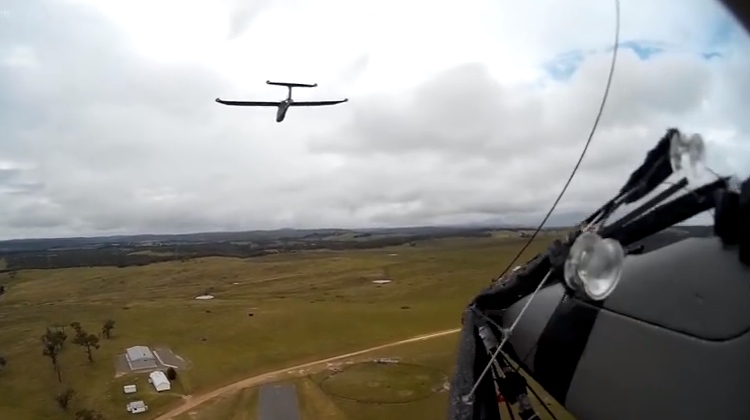
The potential to use unmanned aerial vehicles (UAV) for logistically challenging events such as the search for Malaysia Airlines flight MH370 may soon be realised after a University of Sydney researcher managed to dock a drone to a leading aircraft.
The successful experiment took place at the end of 2014 and involved a drone docking onto a cone-shaped, parachute-like drogue using an infrared camera, GPS technology and sensors.
This content is available exclusively to Australian Aviation members.
A monthly membership is only $5.99 or save with our annual plans.
- Australian Aviation quarterly print & digital magazines
- Access to In Focus reports every month on our website
- Unlimited access to all Australian Aviation digital content
- Access to the Australian Aviation app
- Australian Aviation quarterly print & digital magazines
- Access to In Focus reports every month on our website
- Access to our Behind the Lens photo galleries and other exclusive content
- Daily news updates via our email bulletin
- Unlimited access to all Australian Aviation digital content
- Access to the Australian Aviation app
- Australian Aviation quarterly print & digital magazines
- Access to In Focus reports every month on our website
- Access to our Behind the Lens photo galleries and other exclusive content
- Daily news updates via our email bulletin
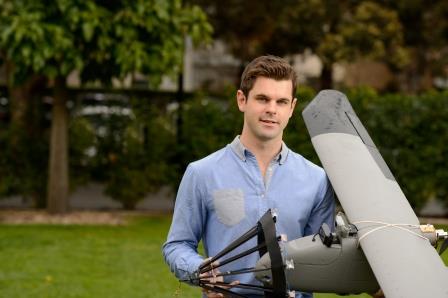
Daniel Wilson, the University of Sydney PhD candidate behind the experienemt, said the biggest challenge was to develop accurate and reliable relative positioning performance to allow a second aircraft to dock with a small target, particularly in turbulence.
“This type of technology is useful in situations where greatly extended persistence over an area is desirable, such as the search for the MH370,” Wilson said in a statement.
“It would allow aircraft to use their fuel to search the target area, rather than flying back and forth from land. It could also be used to keep high-flying UAVs airborne, in place of satellites for communication.”
“Aerial refuelling has been used with manned aircraft, but to the best of our knowledge, UAV airborne docking had not been demonstrated prior until our experiments late last year.
A online video that showed the docking can be found here:

Wilson, who has also won an International Simulink Design Challenge for an autopilot and rapid software development process, said the docking system also had other applications.
“In addition to docking, this system could be used for any application that requires highly accurate positioning, relative to a static or moving target. This could include, precision landing on ships, net recovery or close formation flight,” Wilson said.