
 iscover
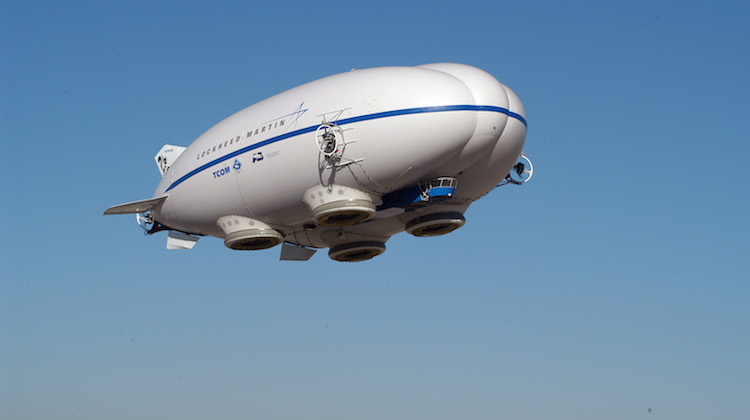
If you think of an airship, most people will get an image of the giant rigid airships of the 1920s. Huge, lighter than air behemoths, the size of ocean liners, the airships were a glamorous and unique way for passengers to travel, with the North Atlantic Ocean being their primary domain.
Long since abandoned as a primary mode of transport, you could be forgiven for thinking that the airship had been consigned to the history books. However, for the past two decades, Lockheed Martin’s Skunk Works has been working on reviving the airship as a modern, efficient and environmentally friendly cargo transport.
This content is available exclusively to Australian Aviation members.
A monthly membership is only $5.99 or save with our annual plans.
- Australian Aviation quarterly print & digital magazines
- Access to In Focus reports every month on our website
- Unlimited access to all Australian Aviation digital content
- Access to the Australian Aviation app
- Australian Aviation quarterly print & digital magazines
- Access to In Focus reports every month on our website
- Access to our Behind the Lens photo galleries and other exclusive content
- Daily news updates via our email bulletin
- Unlimited access to all Australian Aviation digital content
- Access to the Australian Aviation app
- Australian Aviation quarterly print & digital magazines
- Access to In Focus reports every month on our website
- Access to our Behind the Lens photo galleries and other exclusive content
- Daily news updates via our email bulletin
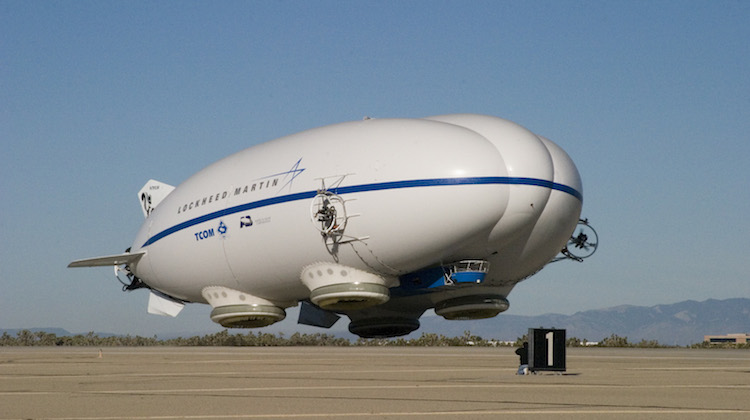
That work has culminated in the Hybrid Airship, which has just received its first letter of intent from launch customer Straightline Aviation, which wants 12 aircraft in service by 2021. With a market price of $US40 million each, the 82m long craft has the potential to revolutionise transportation to remote locations.
The Hybrid Airship is a far cry from the rigid airships of yesteryear. Aside from sharing the name “airship”, the similarities between the two craft are sparse. Skunk Works’ design is a heavier than air construction, which relies on aerodynamic properties to provide lift and maximum manoeuvrability.
Hybrid Enterprises sells the Hybrid Airship on behalf of Lockheed Martin and its chief executive Rob Binns is upbeat about the practical applications of such an aircraft.
“This is the world’s first cargo airship, designed to bring affordable, environmentally friendly transportation to remote locations,” Binns told Australian Aviation in an interview during a visit to Perth this week.
“When you realise half of the world’s population doesn’t have access to paved roads, you can get a real sense of the opportunities that the Hybrid Airship opens up.”
Lockheed Martin has produced some artists’ impressions of the hybrid airship in practical use:

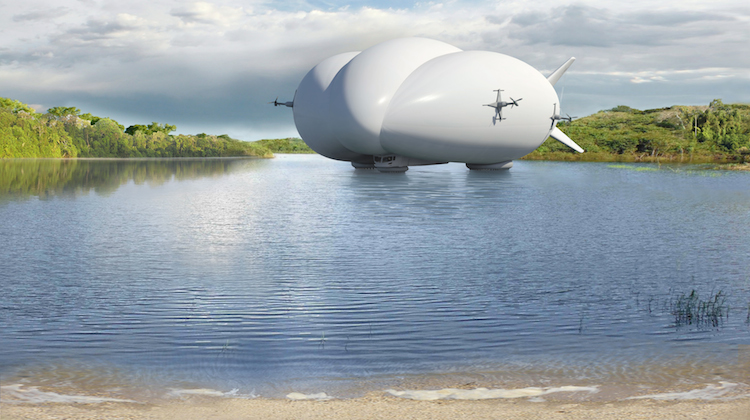


Although primarily a cargo transport, the aircraft can also carry up to 19 passengers. This allows transportation opportunities to be opened up in remote areas across the globe.
The Hybrid Airship’s design means it does not require ground support to land. Its heavier than air characteristics mean it can descend and land unaided. Once on the ground, it can deliver its 21 tonnes of cargo by “anchoring” itself to any terrestrial surface.
It achieves this through an air cushion landing system. Similar to the effect created by a hover craft, this system allows the aircraft to manoeuvre itself on the ground. “Anchorage” is achieved by reversing the airflow and creating a vacuum, effectively attaching the Hybrid Airship to the ground for maximum stability during unloading.
“Unlike the airships of the 1920s that were lighter than air, the Hybrid Airship is somewhat heavier than air,” Binns said.
“Eighty per cent of the lift is generated by helium gas, while the remaining 20 per cent is achieved from the aerodynamic design of the envelope. Basically, the envelope is one giant wing, creating lift.”
The Hybrid Airship is currently undergoing US Federal Aviation Administration, European Aviation Safety Agency and Transport Canada certification. It is expected to enter service in 2018.
Lockheed Martin has two promotional videos of the hybrid airship, which can be seen below:
Straightline Aviation, based in the UK, was founded specifically for operating hybrids. Its chief executive Mike Kendrick said he was excited about being the launch customer of aircraft.
“We are delighted to be first in line with this magnificent aircraft that is going to dramatically change the way cargo is moved around the world,” Kendrick said in a statement when the letter of intent was announced on March 30.
“The clear-cut economic and environmental advantages of these Hybrids are attracting vast amounts of attention from a wide-range of potential end users.”
Hybrid Airship Statistics
Length: 82m
Width: 47.85m
Height: 23.77m
Range: 2,600km
Cruising Speed: 110 km/h
Engines: 4x aviation rated diesel engines. Can rotate 120 degrees for direct lift.
Lift Gas: Helium (non-flammable)
Payload: 21 tonnes
Passengers: 19 passengers
Crew: 2 crew, captain, first officer







Mike Borgelt
says:That is one ugly flying machine. The Lockmart “Pachyderm”.
Richard
says:Certaiy would help keep things ticking in cash strapped WA.
Karl Koklich
says:“Anchorage” is achieved by reversing the airflow and creating a vacuum, effectively attaching the Hybrid Airship to the ground for maximum stability during unloading. Sounds like landing in a desert(sandy) area would be difficult, if not impossible.
Nolan Jensen
says:Hydrogen would provide more lift and solar electric motors would grant clean renuable propulsion. Why not?