
 iscover
Warning: Undefined array key "image-size-770" in /data/www/upgrade/australianaviation.com.au/httpdocs/wp-content/themes/australianaviation/functions.php on line 1310
Warning: Trying to access array offset on null in /data/www/upgrade/australianaviation.com.au/httpdocs/wp-content/themes/australianaviation/functions.php on line 1310
Warning: Undefined array key "image-size-770" in /data/www/upgrade/australianaviation.com.au/httpdocs/wp-content/themes/australianaviation/functions.php on line 1310
Warning: Trying to access array offset on null in /data/www/upgrade/australianaviation.com.au/httpdocs/wp-content/themes/australianaviation/functions.php on line 1310
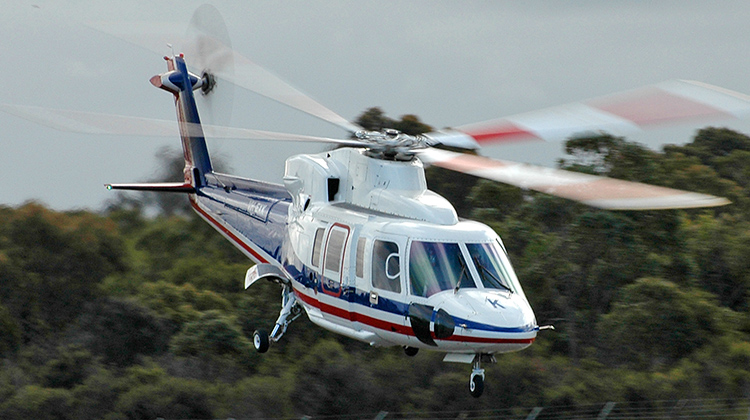
The Australian Transport Safety Bureau (ATSB) has released its final report into the engine failure of an Esso Australia Sikorsky S-76C on the morning of July 11 2013 while the helicopter was departing from an offshore platform.
The failure of the right-hand engine in VH-EXU occurred as the helicopter was climbing out on departure from the Snapper platform in Bass Strait, 74km east of Longford, south-east of Sale in Victoria’s Gippsland region.
This content is available exclusively to Australian Aviation members.
A monthly membership is only $5.99 or save with our annual plans.
- Australian Aviation quarterly print & digital magazines
- Access to In Focus reports every month on our website
- Unlimited access to all Australian Aviation digital content
- Access to the Australian Aviation app
- Australian Aviation quarterly print & digital magazines
- Access to In Focus reports every month on our website
- Access to our Behind the Lens photo galleries and other exclusive content
- Daily news updates via our email bulletin
- Unlimited access to all Australian Aviation digital content
- Access to the Australian Aviation app
- Australian Aviation quarterly print & digital magazines
- Access to In Focus reports every month on our website
- Access to our Behind the Lens photo galleries and other exclusive content
- Daily news updates via our email bulletin
After setting the nose-down attitude for the departure, the crew reported a loud bang accompanied by significant airframe vibration.
The helicopter descended rapidly, however the pilot and co-pilot recovered the descent to within 30ft of the sea surface and established a positive rate of climb.
The crew also discharged fire extinguisher agent into the right engine during the recovery in response to an engine fire warning.
The S-76C, with two crew and 10 passengers on board, made a single-engine landing back to Longford under escort by other company helicopters.
The ATSB report said the engine failure was attributed to the fracture of a second-stage, high-pressure turbine blade.
The liberated blade impacted and damaged adjacent blades with the resulting loss of power and associated increased vibration.

The engine and failed blade structure were inspected by the engine manufacturer which concluded that the failure was due to a combination of metal fatigue, blade creep and oxidation deposits.
While a definitive cause for the blade fracture has yet to be determined, blade material, dimensional and quality assurance checks have ruled out any deficiencies.
“In the absence of a conclusive cause of the blade fracture and remedial information, the operator imposed a service life limitation on their helicopters’ engine turbine assemblies that were fitted with the same blades,” said the ATSB report.
“In addition, the engine manufacturer issued notifications to operators and introduced specific inspection requirements relevant to potentially affected turbine assemblies.”

The ATSB also said this event highlighted how a situation can quickly change from normal operations to one where the flight crew have to deal with an in-flight emergency.
Their report said effective crew interaction, thorough pre-briefing and anticipation of what can go wrong has been shown to increase the likelihood of a successful outcome and the recovery from the engine failure and the safe return to Longford reaffirmed the benefits of those preparatory actions.
At the time of writing, the engine manufacturer was continuing its investigation into the cause of the blade fracture.
The full report can be read on the ATSB website.







Martin
says:This is a good outcome and shows the advantage of twin engine helos, even during the take-off phase.
I might be nit-picky but the photo that goes with this item is of VH-EXK going by the letter on the nose of the helo!