
 iscover
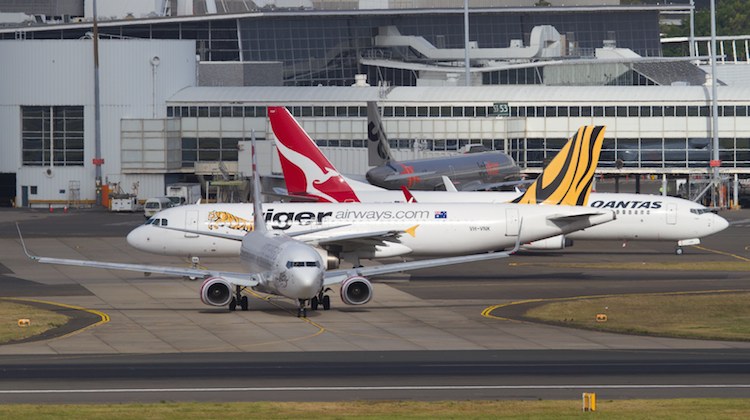
Ticket prices for Australian domestic travel across all cabin classes were higher in November, new figures show.
The Bureau of Infrastructure, Transport and Regional Economics (BITRE) measure of domestic business class airfares was at 94.9 index points in November, up from 91.2 points a year earlier. The measure has risen for the past 15 months on a year-on-year basis.
This content is available exclusively to Australian Aviation members.
A monthly membership is only $5.99 or save with our annual plans.
- Australian Aviation quarterly print & digital magazines
- Access to In Focus reports every month on our website
- Unlimited access to all Australian Aviation digital content
- Access to the Australian Aviation app
- Australian Aviation quarterly print & digital magazines
- Access to In Focus reports every month on our website
- Access to our Behind the Lens photo galleries and other exclusive content
- Daily news updates via our email bulletin
- Unlimited access to all Australian Aviation digital content
- Access to the Australian Aviation app
- Australian Aviation quarterly print & digital magazines
- Access to In Focus reports every month on our website
- Access to our Behind the Lens photo galleries and other exclusive content
- Daily news updates via our email bulletin
In June it was at 95.6 points, the highest level since reaching 107 points in November 2011.
The figures were a further indication the corporate and government travel sector was getting back on the road after being on pause in the months around the federal election.
Similarly, the best discount economy index was also up in November at 61.8 points, compared with 60.8 points in November 2015.
And the BITRE measure of airfares for restricted economy was at 80.1 points, up from 79.1 points a year earlier. The restricted economy index was at eight-month high in September.
The BITRE air fare series was a price index of the lowest available fare in each fare class, weighted over selected routes.
Both Australia’s major carriers Virgin and Qantas have cut domestic capacity in recent times in an effort to improve yields and better match the number of seats in the market with demand.

And looking ahead, Qantas has guided the market to a one per cent reduction in domestic capacity across its Qantas and Jetstar brands in the six months to December 31 2016, compared with the prior corresponding period, as it adjusts schedules to reflect the weakness in mining-related markets.
In a trading update published on October 31, Qantas said the domestic market had reverted to more stable conditions in September, following a couple of months of “demand softness” in July and August due to the federal election and other one-off events that positively impacted trading conditions in the prior year.
However, the resources market was continuing to act as a drag on demand. Qantas said it suffered a $28 million fall in resources market revenue in the first quarter, primarily from intra-Western Australia and Queensland.
While Virgin did not offer capacity guidance for the period ahead in its first quarter trading update, the airline group did report a statutory loss after tax of $34.6 million for the three months to September 30 2016, compared with a statutory profit after tax of $1.7 million in the prior corresponding period, amid a sluggish domestic market.
“Capacity is being actively managed in response to the trading environment,” Virgin said on November 2.
“The group will continue to exercise disciplined capacity management in line with trading conditions.”
Figures from the International Air Transport Association (IATA) showed the capacity, measured by available seat kilometres (ASK) in the Australian domestic market had grown just 0.2 per cent in the year to September, with RPKs rising 2.4 per cent.







Dave
says:November just started. How can they release data saying November prices are higher